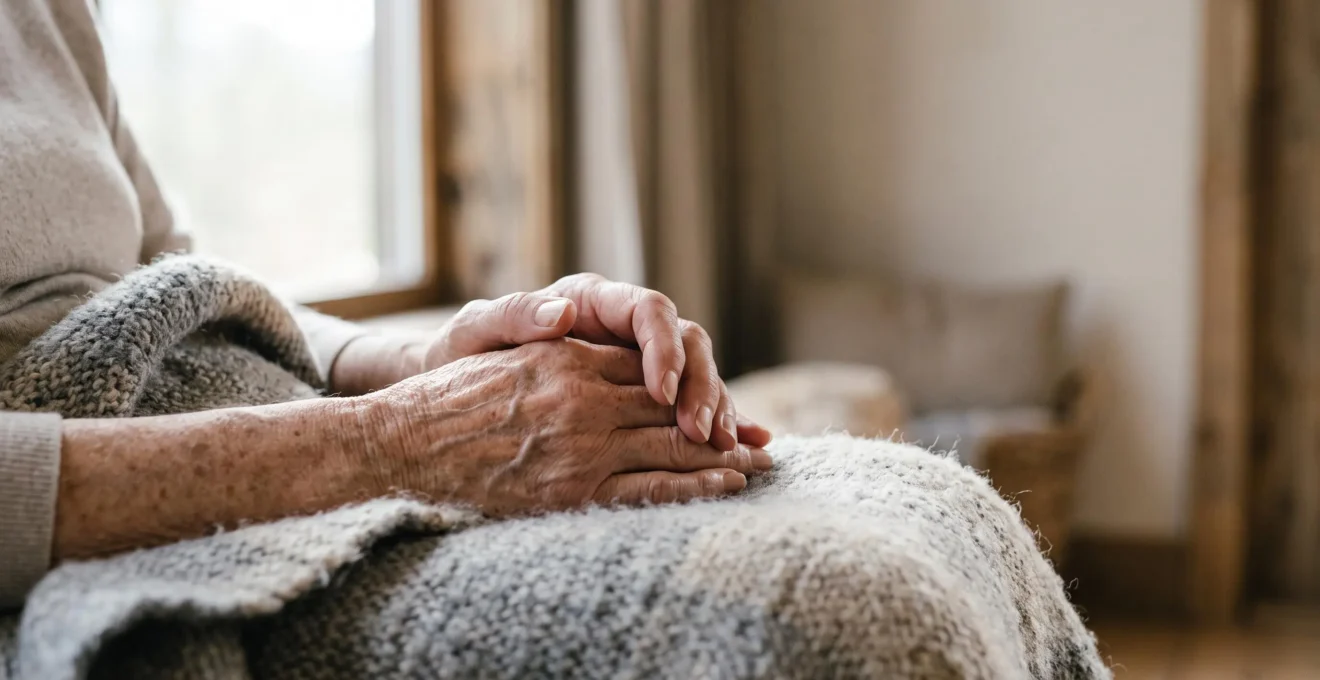
That persistent chill in your hands and feet after 60 isn’t just a comfort issue; it’s a direct signal of physiological changes within your blood vessels. The key culprits are decreased endothelial function and increased arterial stiffness, which reduce the delivery of warm, oxygenated blood. However, this is not an inevitable decline. By understanding these mechanisms, you can use targeted strategies like activating your ‘calf muscle pump’ through specific exercises and correctly using compression to actively manage and improve your peripheral circulation.
The feeling is all too common: a persistent, deep chill in your fingers and toes that even a thick pair of socks can’t seem to shake. For many over 60, this sensation, sometimes accompanied by numbness or a pins-and-needles feeling, is often dismissed with a sigh as “just another part of getting older.” While it’s true that our bodies change, accepting this discomfort as inevitable means missing a crucial opportunity to understand and support your vascular health. The typical advice—wear warmer clothes, move around a bit—only scratches the surface of a profound biological process.
The real issue isn’t just about temperature; it’s about flow. The intricate network of arteries, veins, and capillaries responsible for delivering warm, oxygenated blood to your extremities becomes less efficient with age. But what if the key wasn’t just to fight the cold from the outside, but to improve the circulatory highway from the inside? The true path to comfort and health lies not in simply masking the symptom, but in understanding the specific changes happening to your blood vessels and deploying a targeted toolkit of interventions that directly counteract them.
This article will guide you through the science behind why your circulation changes. We will move beyond generic advice to explain the precise mechanisms at play, from the cellular lining of your arteries to the powerful muscles in your legs. We will then compare the most effective tools at your disposal—movement, compression, and supplements—to help you build a practical, evidence-based plan for reclaiming warmth and comfort.
To navigate this complex but crucial topic, this article is structured to build your understanding step by step. Below is a summary of the key areas we will explore to empower you with the knowledge to manage your vascular health effectively.
Summary: Why Do Your Hands and Feet Get Cold and Numb More Easily After 60?
- What Happens to Your Blood Vessels Over 60 That Reduces Flow to Your Extremities?
- How to Boost Circulation to Cold Hands and Feet Through Movement and Daily Habits?
- Compression Socks, Exercise, or Supplements: Which Actually Improves Poor Circulation?
- Which Circulation Symptoms Are Normal Ageing and Which Signal Vascular Disease?
- How to Prevent Circulation Problems During Long Sitting Periods or After Surgery?
- What Actually Changes in Your Heart and Arteries Between 50 and 70?
- What Changes in Your Body After 60 That Makes Dehydration So Much More Likely?
- Why Does Heart Disease Risk Double Every Decade After 55 Even for Previously Healthy People?
What Happens to Your Blood Vessels Over 60 That Reduces Flow to Your Extremities?
The journey of blood to your fingertips and toes is governed by the health of your blood vessels. After age 60, two primary changes occur that directly impact this flow. First, the inner lining of your arteries, known as the endothelium, becomes less effective. This lining is responsible for producing nitric oxide, a crucial molecule that signals the surrounding smooth muscle to relax, allowing the vessel to widen (vasodilation) and blood to flow freely. As we age, the endothelium’s ability to produce nitric oxide declines. In fact, a landmark vascular study measuring forearm blood flow in healthy adults showed a progressive decline in this function from age 19 all the way to 69.
Second, the arteries themselves become stiffer. Think of a young artery as a flexible, rubbery hose that expands easily with each heartbeat. An older artery is more like a rigid pipe. This loss of flexibility, called arterial stiffness or reduced compliance, means the vessel can’t absorb the pressure wave from the heart as effectively. The result is a less efficient propulsion of blood towards the smaller, distant vessels in your hands and feet. This combination of narrower, stiffer “pipes” is the fundamental reason why extremities feel the cold more acutely and are more prone to numbness.
How to Boost Circulation to Cold Hands and Feet Through Movement and Daily Habits?
While you can’t turn back the clock on arterial stiffness, you can significantly improve blood flow through targeted daily actions. The most powerful tool is not just general activity, but movement that specifically engages the calf muscle pump. Your calf muscles act as a “second heart”; when you walk or flex your ankles, they contract and squeeze the deep veins in your legs, powerfully pushing blood back up towards the heart. This improves venous return and helps de-congest the entire system, allowing fresh arterial blood to flow in more easily. Simple activities like brisk walking, calf raises, and even just pointing and flexing your feet while seated can make a tangible difference.
Diet also plays a direct role. To support your body’s production of nitric oxide, the key vasodilator, focus on foods rich in nitrates, such as leafy greens (spinach, arugula), beets, and celery. Flavonoids, found in berries, dark chocolate, and tea, have also been shown to support endothelial function. Conversely, smoking is one of the most damaging habits for circulation, as it directly causes vasoconstriction (narrowing of blood vessels) and accelerates arterial stiffening. Hydration is also key; being even slightly dehydrated can make your blood thicker and harder to pump.
Your Action Plan: 5 Steps to Better Peripheral Flow
- Movement Priority: Incorporate daily walks and ankle flexion exercises to activate your calf muscle pump.
- Elevate to Assist: When resting, elevate your legs slightly to use gravity to help venous return to the heart.
- Dietary Support: Add nitrate-rich foods like spinach and beets to your diet to boost natural vasodilation.
- Eliminate Constrictors: Avoid smoking entirely, as it severely constricts and damages blood vessels.
- Consult Before Compressing: Always speak to a healthcare provider before using compression socks to ensure they are the right tool for your specific condition.
Compression Socks, Exercise, or Supplements: Which Actually Improves Poor Circulation?
When seeking to improve circulation, people often wonder where to invest their effort. The answer lies in understanding that exercise, compression, and supplements are not competing solutions, but tools with distinct, complementary mechanisms. Exercise remains the cornerstone for long-term vascular health. It directly improves endothelial function, enhances nitric oxide production, and strengthens the calf muscle pump, addressing the root causes of poor flow.
Compression socks, on the other hand, are a powerful tool for managing symptoms and preventing complications, especially during periods of inactivity. As Dr. Yuka Fukaya explains, “The socks stimulate calf muscles when you move and can help prevent swelling.” They work by applying graded external pressure, which helps squeeze the veins and assists the calf muscle pump in pushing blood back to the heart, a process known as improving venous return. They are particularly effective for preventing swelling and blood clots during long flights or extended sitting.
Supplements, like those containing dietary nitrates (from beet extract) or L-arginine, represent a more targeted biochemical approach. They aim to increase the building blocks for nitric oxide, theoretically improving vasodilation. While evidence is emerging, their effects can be variable and they should not be seen as a replacement for the fundamental benefits of exercise and a healthy diet.
This table breaks down the evidence for each approach, based on a comprehensive view of vascular health research. The data on compression, for example, is supported by a Cochrane review cited by the American Heart Association.
| Tool | Best Use Case | Mechanism | Evidence Level |
|---|---|---|---|
| Compression Socks | Long-haul flights, prolonged sitting, travel | External pressure gradient stimulates calf muscle pump and venous return | High-certainty evidence for reducing symptomless DVT on flights over 4 hours |
| Exercise | Long-term foundation for vessel health | Improves endothelial function, arterial compliance, and calf muscle pump efficiency | Strong long-term evidence for vascular health, mixed evidence for immediate performance effects |
| Supplements (e.g., dietary nitrate) | Targeted support for nitric oxide-dependent vasodilation | Increases plasma nitrate/nitrite, improving flow-mediated dilation | Emerging evidence in older adults, effects vary by dose and duration |
Which Circulation Symptoms Are Normal Ageing and Which Signal Vascular Disease?
A mild increase in feeling cold is a common part of the aging process due to the gradual changes in vascular function we’ve discussed. However, it’s crucial to distinguish this from symptoms that signal an underlying medical condition like Peripheral Artery Disease (PAD). PAD is a form of atherosclerosis where plaque builds up in the arteries supplying blood to the limbs, severely restricting flow. While uncommon before 50, its prevalence rises sharply with age; clinical geriatric data shows that it affects roughly 20% of people older than 80.
So, what are the red flags? While normal aging might cause cool hands and feet, PAD presents more severe symptoms. Pay close attention to:
- Claudication: Pain, cramping, or aching in the legs (calves, thighs, or buttocks) that occurs during exercise and disappears with rest. This is a classic sign that your muscles aren’t getting enough blood to meet the demand.
- Skin Changes: The skin on the feet or legs may become shiny, thin, or pale. You might also notice slow-growing toenails or a loss of hair on the legs.
- Non-healing Sores: Wounds or ulcers on the feet or toes that are very slow to heal, or do not heal at all, are a serious warning sign of poor arterial supply.
- Persistent Numbness or Weakness: While temporary numbness can happen, persistent or worsening numbness in the legs or feet should be evaluated.
Dismissing these symptoms as “normal aging” is dangerous. If you experience any of them, it is essential to consult a healthcare provider for a proper diagnosis.
How to Prevent Circulation Problems During Long Sitting Periods or After Surgery?
Periods of prolonged immobility—whether due to a long-haul flight, a desk job, or recovery from surgery—pose a significant risk to your circulation. When you sit for hours, the calf muscle pump is inactive, and the sharp bend at your hips and knees can physically compress and impede blood vessels. This leads to blood pooling in the lower legs, increasing pressure in the veins and raising the risk of swelling and, more seriously, Deep Vein Thrombosis (DVT), a type of blood clot.
The first line of defense is simple: break up periods of sitting. Stand up, stretch, and walk around for a few minutes every hour. If you’re confined to a chair, perform “desk exercises” like ankle circles, foot pumps (lifting your toes then your heels repeatedly), and leg extensions to keep the muscles engaged and the blood moving. After surgery, follow your medical team’s advice on mobilization; early, gentle movement is crucial for preventing circulatory complications.
For high-risk situations like flights over four hours, compression stockings are a highly effective, evidence-based tool. Their gentle, graded pressure provides an external assist to the venous system, preventing blood from pooling. The evidence for this is strong; a high-certainty evidence review across 2,918 people found that they significantly reduce the risk of symptomless DVT on long flights. When choosing socks, ensure they are properly fitted and provide graduated compression (tighter at the ankle, looser at the top) for maximum benefit.
What Actually Changes in Your Heart and Arteries Between 50 and 70?
The cold feeling in your hands and feet is a peripheral symptom of a systemic process. Between the ages of 50 and 70, your entire cardiovascular system undergoes a structural evolution. The heart muscle itself can become slightly thicker and stiffer, which may affect its ability to fill with blood between beats. However, the most impactful changes happen within the ~60,000 miles of arteries that crisscross your body. As we’ve seen, this network gradually loses its youthful elasticity. This is a universal, age-related process.
Aging is often associated with reduced leg blood flow, increased arterial stiffness, and endothelial dysfunction, all of which are related to declining nitric oxide (NO) bioavailability.
– Vascular Physiology Research Team, PMC / National Institutes of Health
This statement encapsulates the core issue. The increase in arterial stiffness means that with every beat, the heart has to push against a more rigid, less forgiving system. This elevates systolic blood pressure and puts more strain on both the heart and the delicate inner lining of the arteries (the endothelium). As research on vascular aging shows that older men (average age 69) exhibit this increased stiffness and endothelial dysfunction, it confirms this is a measurable, physiological shift, not just a vague notion of “getting older.” This systemic stiffening is the fundamental backdrop against which more specific risk factors, like cholesterol, exert their damage.
What Changes in Your Body After 60 That Makes Dehydration So Much More Likely?
While we focus on the “pipes” of the circulatory system, we must not forget the fluid that flows through them: blood. The viscosity of your blood has a major impact on how easily your heart can pump it. And a key factor influencing viscosity is hydration. After 60, your body becomes significantly more susceptible to dehydration for a few key physiological reasons, and clinical data from the NIH indicates that older individuals are 20% to 30% more prone to developing dehydration.
The primary reason is a blunted thirst mechanism. As we age, the part of the brain that signals thirst becomes less sensitive. You can be physiologically dehydrated long before you actually feel thirsty. Furthermore, the kidneys’ ability to concentrate urine and conserve water diminishes, meaning you lose more fluid for the same intake. This creates a dangerous combination: you need more water to stay hydrated, but your body is less likely to tell you when you need to drink it.
Case Study: The Diminished Thirst Response
A foundational study published in the New England Journal of Medicine highlighted this phenomenon perfectly. Researchers compared healthy elderly men and young men after 24 hours of water deprivation. The older group showed more significant signs of dehydration in their blood tests (higher sodium and osmolality). Yet, when offered water, they reported feeling less thirsty and drank significantly less than the younger men, failing to fully rehydrate. This study provided clear, measurable proof that the body’s thirst-driven rehydration reflex is measurably impaired in older adults.
Even mild dehydration makes blood thicker, forcing the heart to work harder and making it more difficult for blood to perfuse the tiny capillaries in the hands and feet. This adds another layer of difficulty on top of the age-related changes in the vessels themselves, making consistent hydration an essential, non-negotiable part of any circulation-boosting strategy.
Key takeaways
- The chill in your extremities after 60 is due to specific physiological changes: decreased endothelial function and increased arterial stiffness.
- You can actively improve circulation by engaging your ‘calf muscle pump’ with targeted movements and supporting nitric oxide production through diet.
- Distinguishing between normal age-related coldness and red-flag symptoms of Peripheral Artery Disease (like pain on exertion) is crucial for seeking timely medical care.
Why Does Heart Disease Risk Double Every Decade After 55 Even for Previously Healthy People?
The gradual stiffening of arteries and decline in endothelial function create a vulnerable environment. This is why heart disease risk doesn’t just increase—it accelerates, roughly doubling every decade after age 55. For previously healthy individuals, this can be a confusing and alarming reality. The reason is that the slow, cumulative vascular changes create a tipping point. The loss of arterial flexibility increases blood pressure, which in turn puts more stress on the endothelium, creating a vicious cycle that encourages the development of atherosclerosis (plaque buildup).
Persons with PAD are well-known to have increased mortality risk, mainly due to cardiovascular disease, with 3-6 fold higher risk of 10-year mortality compared to those without.
– Atherosclerosis Risk in Communities (ARIC) Study Researchers, PMC / National Institutes of Health
This quote underscores the seriousness of compromised peripheral circulation, as PAD is a powerful indicator of systemic disease. The same process of plaque buildup that causes cramping in the legs is also happening in the arteries of the heart (coronary arteries) and brain (carotid arteries). Therefore, cold hands and feet are more than just a nuisance; they can be the earliest, most distant signal that the entire cardiovascular system is under strain. The exponential risk increase after 55 reflects the point at which these decades-long, slow changes begin to manifest as clinically significant disease, even in those who have maintained a healthy lifestyle.
By understanding these interconnected factors, you can move from being a passive observer of aging to an active participant in your own vascular health. The next logical step is to discuss these concepts with your healthcare provider to create a personalized prevention and management plan.
Frequently Asked Questions on Why Do Your Hands and Feet Get Cold and Numb More Easily After 60?
When should I see a doctor about cold extremities?
If cold hands and feet are persistent, painful, or accompanied by other symptoms like numbness or skin changes, it’s important to schedule an appointment promptly rather than dismissing it as normal aging.
What tests might a doctor use to check circulation?
Doctors may use an ankle-brachial index (ABI) to compare blood pressure in the ankle and arm, a Doppler ultrasound to measure arterial blood flow, blood tests for cholesterol and blood sugar, or imaging scans to spot narrowed arteries.
How common is peripheral artery disease in older adults?
Peripheral arterial disease is uncommon before age 50 but rises sharply with age, affecting roughly 20% of people older than 80.