Well-being and quality of life
Well-being after 60 is not simply the absence of illness or the presence of comfort. It is a dynamic, multidimensional experience that determines whether your later years feel like a slow decline or a rich continuation of life. Research consistently shows that people who thrive in their sixties, seventies, and beyond share something in common: they nurture multiple dimensions of their health simultaneously, rather than focusing on just one.
This matters because neglecting any single dimension creates a ripple effect. Physical discomfort erodes mood. Social isolation accelerates cognitive decline. Lack of purpose drains motivation for self-care. Understanding these connections transforms how you approach your own well-being—not as a checklist of separate tasks, but as an interconnected system where small improvements in one area strengthen all the others.
The sections that follow explore the core dimensions that shape quality of life after 60: physical vitality, cognitive health, social connections, psychological resilience, lifelong learning, and purpose. Each section introduces key concepts and practical considerations, serving as your starting point for deeper exploration.
Physical Vitality: The Foundation You Can Strengthen at Any Age
Physical health provides the energy and capacity that makes everything else possible. Without adequate vitality, even the most meaningful social invitation feels like a burden. Yet many people over 60 make a critical mistake: they assume that doing less protects their energy, when the opposite is often true. The body responds to appropriate challenge by building capacity, and to inactivity by reducing it.
Energy Management Beyond Caffeine
Sustained energy throughout the day depends on three interconnected systems: sleep quality, movement patterns, and nutritional timing. Small adjustments to when you sleep—not just how long—can add hours of productive energy daily. Morning routines that incorporate light exposure and gentle movement before caffeine set a different metabolic tone than reaching for coffee immediately upon waking.
The Three Health Foundations
When resources are limited, people often ask which foundation deserves attention first: sleep, movement, or nutrition. The honest answer depends on which is currently most compromised. However, sleep typically offers the highest leverage—poor sleep undermines both the motivation to move and the body’s ability to process nutrients effectively. Consider this hierarchy:
- Sleep: Affects hormone regulation, cognitive function, and recovery capacity
- Movement: Maintains circulation, metabolism, and functional independence
- Nutrition: Provides building blocks for repair and sustained energy
Living Well With Chronic Conditions
Most people over 65 manage at least one chronic condition. The shift from fighting conditions to living well alongside them represents a fundamental change in mindset. This means understanding your conditions deeply enough to make daily decisions confidently, rather than passively following instructions. It means noticing patterns, adjusting activities, and maintaining quality of life even when symptoms persist.
Cognitive Health: Building a Brain That Stays Sharp
The brain is not a machine that simply wears out with age. It is a living organ that responds to how you use it. The concept of cognitive reserve—the brain’s resilience against age-related changes—explains why some 75-year-olds remain mentally sharp while others the same age struggle with basic tasks. This reserve can be built, maintained, and strengthened throughout life.
What Actually Challenges Your Brain
Not all mental activities are equal. The crossword puzzle you have completed daily for years may feel like brain exercise, but familiarity reduces its cognitive benefit. Your brain grows through novel challenges—tasks that require learning new patterns rather than repeating established ones. Learning piano at 65 builds more neural connections than playing songs you already know. Studying a language challenges the brain differently than watching documentaries about that culture.
The difficulty level matters too. Activities should be challenging enough to require effort but not so difficult that they create frustration and abandonment. Think of it like physical exercise: some resistance builds strength, but impossible weights cause injury and discouragement.
Sustainable Mental Stimulation
The enthusiasm that launches a brain-training program often fades within months. Sustainable cognitive health requires variety, genuine interest, and realistic expectations. Forcing yourself through brain games you hate may not help cognition—engagement and enjoyment appear to matter. Consider rotating between different types of challenges:
- Structured learning (courses, languages, instruments)
- Social mental activities (discussion groups, teaching others)
- Creative pursuits (writing, art, problem-solving)
- Physical-cognitive combinations (dance, navigation, new sports)
Social Connections: The Most Underrated Health Factor
If isolation after 65 were a medication, it would carry a warning label: this product increases mortality risk equivalent to smoking 15 cigarettes daily. Yet while everyone knows smoking is dangerous, the health impact of loneliness remains dramatically underestimated. Socially connected 75-year-olds live, on average, seven years longer than their isolated peers.
Why Connection Becomes Harder With Age
The social networks that sustained people through working years often dissolve in retirement. Colleagues disappear. Relocations separate old friends. The loss of a partner removes the person who anchored daily social life. Building new connections at 65 or 70 requires deliberate effort and often feels uncomfortable—like exercising a muscle that has weakened from disuse.
Paradoxically, many lonely seniors refuse invitations even when they desperately want connection. Social skills feel rusty. Fear of judgment creates avoidance. Understanding this pattern helps overcome it: the discomfort is temporary, while the health benefits are substantial and lasting.
Quality Versus Quantity
Research suggests that one deep friendship may provide more health benefit than ten superficial acquaintances. However, both depth and breadth serve different functions. Close friends provide emotional support during crises. Broader social networks offer information, practical help, and varied stimulation. The healthiest social lives typically include:
- At least one confidant for deep, honest conversation
- Regular interaction with a wider circle (weekly minimum)
- Intergenerational connections that provide fresh perspectives
Psychological Resilience and Emotional Well-Being
Retirement sometimes triggers depression even when life is objectively good—comfortable finances, decent health, loving family. This puzzles people who expected their later years to feel like an extended vacation. The psychological adjustments required in your sixties and seventies are real and significant: identity shifts when career ends, relationships change as children become fully independent, and awareness of mortality intensifies.
Normal Adjustment Versus Clinical Depression
Low mood lasting a few weeks after a major life change is normal adjustment. Low mood persisting for months, interfering with basic functioning, and resistant to improved circumstances may indicate clinical depression requiring professional support. The distinction matters because appropriate responses differ dramatically. Adjustment benefits from time, social support, and gradual engagement with new routines. Depression often requires therapeutic intervention.
Many people over 70 find it difficult to admit they need psychological help—it feels like failure or weakness. Yet seeking support demonstrates self-awareness and proactive health management, not inadequacy.
Training Attention Toward the Positive
The brain naturally weights negative information more heavily than positive—an evolutionary survival mechanism that becomes problematic when aches, losses, and concerning news dominate attention. Positive psychology offers evidence-based techniques for training attention toward what is working, without denying genuine difficulties. This is not naive optimism but deliberate cognitive rebalancing.
Purpose, Learning, and Engagement
Physical comfort does not equal life satisfaction. Many retirees discover this uncomfortable truth when good health and financial security still leave them feeling empty. Humans are meaning-seeking creatures, and the purposes that structured earlier life—career achievement, raising children, building financial security—have expiration dates.
Finding New Sources of Purpose
Purpose after 70 rarely arrives through passive waiting. It emerges from experimentation, from trying activities and noticing which create energy rather than drain it. Volunteering offers particular benefits: giving time away for free paradoxically increases lifespan, and the brain responds measurably to helping others. However, enthusiastic new volunteers often burn out within six months, suggesting that sustainable engagement requires matching your energy level and interests to appropriate commitments.
Lifelong Learning as Health Investment
Learning a language at 70 protects the brain more effectively than daily crosswords—not because languages are inherently special, but because they require sustained acquisition of genuinely new skills. University-level learning is accessible to people who left school decades ago, through online courses, local classes, and self-directed study. The format matters less than the engagement: choose learning that genuinely interests you, at a pace that challenges without overwhelming.
Designing Your Personal Well-Being Strategy
The six dimensions of well-being—physical, cognitive, social, emotional, purposeful, and spiritual—function as an interconnected system. Neglecting any one eventually affects the others. An audit of your current well-being can reveal which dimension is dragging everything else down, allowing targeted intervention rather than scattered effort.
Daily routines that feed body, mind, and spirit need not consume all day. Small, consistent practices often outperform occasional intensive efforts. The goal is creating sustainable rhythms that feel natural rather than burdensome—rituals you look forward to rather than tasks you endure.
Well-being in later life is not about achieving perfect health or constant happiness. It is about maintaining engagement with life, building resilience against inevitable challenges, and creating conditions where good days outnumber difficult ones. Each article in this section explores one aspect of this larger picture, offering practical strategies you can adapt to your own circumstances, preferences, and current starting point.
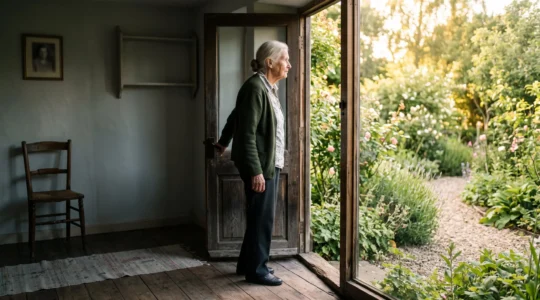
Why Focusing on ‘What’s Wrong’ Can Hold You Back at 70 (And How to Shift Your Focus)
Contrary to popular belief, wellbeing in later life isn’t about ignoring the negative, but about strategically building a ‘positive scaffolding’ strong enough to navigate it. This involves actively training your attention to notice the good, not just passively “being positive.”…
Read more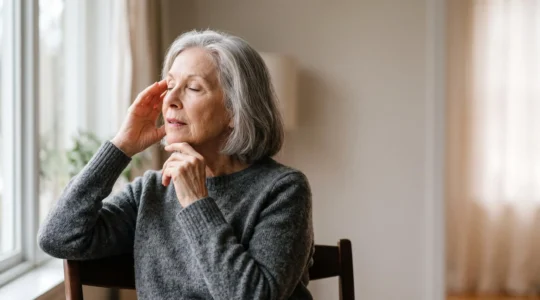
Why Does Learning a Language at 70 Protect Your Brain Better Than Crosswords?
Learning a new language is a fundamentally more powerful brain-building activity for seniors than completing puzzles like crosswords. Language acquisition forces the brain to build entirely new, complex neural networks (“effortful construction”), engaging multiple cognitive systems simultaneously. Crosswords and similar…
Read more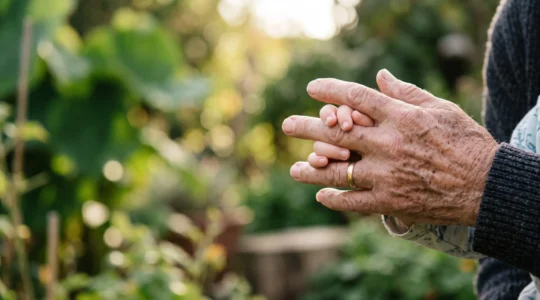
Why Does Spending Time With Grandchildren Lower Your Risk of Cognitive Decline?
The cognitive benefits of intergenerational bonds stem from the mental “work” of bridging the age gap, not just passive time spent together. Engaging with younger people provides novel cognitive challenges and fresh perspectives that same-age peers often cannot. Structured activities…
Read more
Why Does Giving Your Time Away for Free Actually Make You Live Longer?
The common belief that retirement is for guarding your time is flawed; science shows that strategically giving it away is the key to a longer, healthier life. Volunteering triggers a “helper’s high,” releasing chemicals that reduce stress and mortality risk…
Read more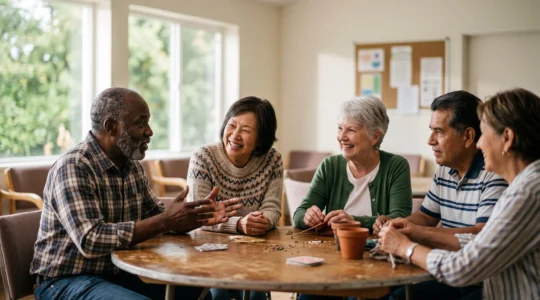
Why Does Joining a Club at 65 Add More Years to Your Life Than Many Medications?
Regularly engaging in a community group is a form of “social prescription” that provides measurable health benefits, often surpassing those of certain medications for age-related conditions. Scientific analysis shows strong social relationships decrease the risk of premature mortality as much…
Read more
Why Retirement Can Trigger Depression, Even When Life Is Good
The common belief is that retirement depression stems from boredom; the reality is it often comes from a deep, unaddressed loss of identity. Your brain doesn’t just need new activities; it needs to perform a complex “identity restructuring” to find…
Read more
Why Does Retirement Sometimes Trigger Depression Even When Life Is Objectively Good?
Retirement depression often has little to do with a lack of activity and everything to do with the collapse of the psychological structure that work once provided. The transition isn’t just about filling free time; it’s a profound identity shift…
Read more
Why Can Good Physical Health Still Leave You Feeling Empty in Retirement?
The real challenge in retirement isn’t just maintaining physical health, but rebalancing your entire “wellness portfolio” to find renewed purpose. Physical health is only one of six interconnected dimensions of well-being; neglecting others (like social, intellectual, or spiritual) creates a…
Read more
Why Does Isolation After 65 Increase Death Risk as Much as Smoking 15 Cigarettes Daily?
The comparison of chronic loneliness to smoking 15 cigarettes a day isn’t a metaphor; it’s a measure of physiological damage. Loneliness is not simply a state of mind but a biological stressor that actively dismantles the body. Chronic isolation dysregulates…
Read more
Why Learning Piano at 65 Builds More Neural Connections Than Playing Songs You Already Know
Contrary to popular belief, simply ‘keeping busy’ with puzzles or brain games is not the most effective way to protect your brain as you age. The brain grows most not from repeating familiar tasks, but from the struggle of learning…
Read more