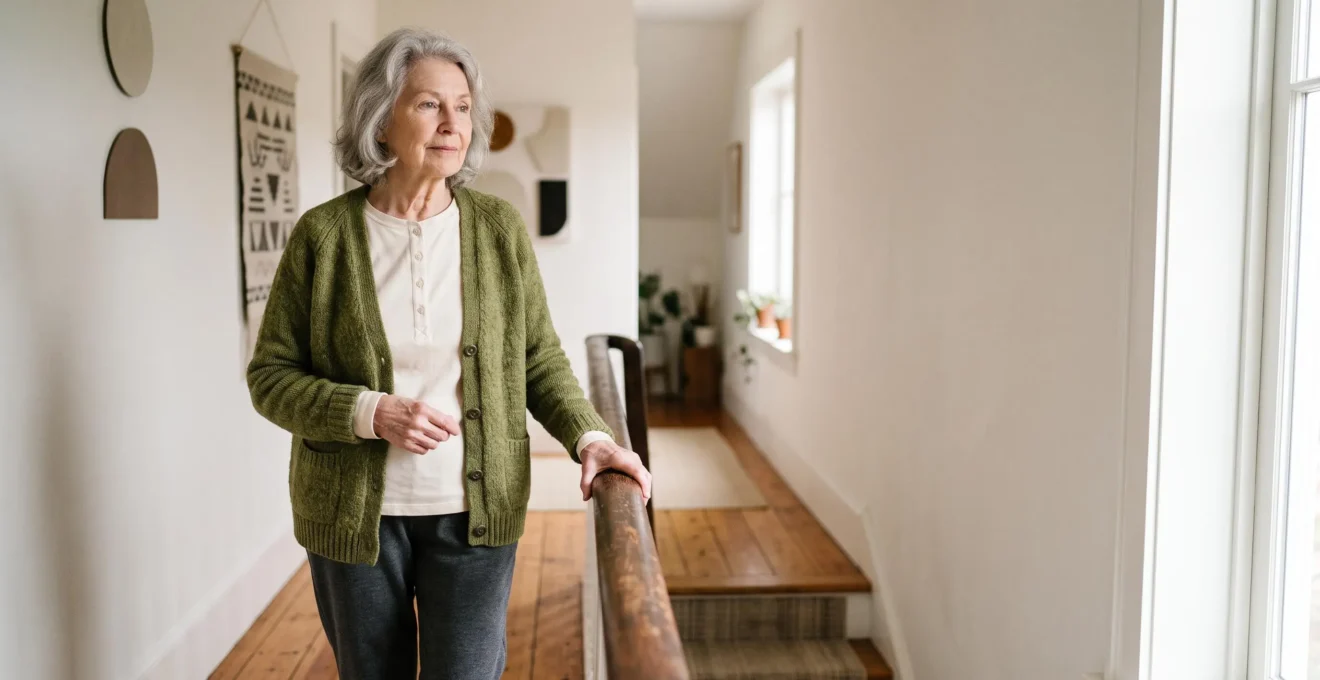
A fall after 70 isn’t just an accident; it’s a brutal “stress test” on your body’s hidden resilience, with potentially life-altering consequences.
- A single hip fracture significantly multiplies mortality risk and is a primary driver of lost independence within the first year.
- Simple physical signs, like weak grip strength, can reveal this hidden fracture risk long before a fall ever occurs.
Recommendation: Shift your focus from passively “fall-proofing” your home to proactively building your biological resilience through targeted strength training and honest risk assessment.
Witnessing a friend or relative rapidly decline after what seemed like a minor fall is a deeply unsettling experience. One day they are independent, the next they are caught in a cycle of hospital visits, rehabilitation, and increasing frailty. This trajectory is frighteningly common, and it forces us to confront a difficult question: was it just bad luck, or was the fall simply the event that exposed a pre-existing vulnerability?
Most advice on this topic focuses on the obvious platitudes: remove throw rugs, install better lighting, and “be careful.” While this advice is not wrong, it is dangerously incomplete. It treats a fall as a simple, mechanical accident. The clinical reality is far more complex. A fall is rarely the start of the problem; it’s the sudden, often catastrophic, culmination of a gradual decline in what we can call ‘biological resilience’.
This article will reframe your understanding of fall risk. We will move beyond the simplistic view of home safety and delve into the critical, yet often invisible, factors that determine whether a stumble results in a bruise or a life-changing fracture. The crucial takeaway is this: the goal isn’t just to prevent a fall, but to build a body so resilient that a fall doesn’t lead to a systemic cascade of health crises.
We will explore the stark reality of what happens after a major fracture, how to assess your own hidden risks through simple physical signs and clinical tools, and most importantly, the evidence-based strategies you can implement to build the strength and bone health that form your greatest insurance policy against a loss of independence.
This guide breaks down the critical aspects of fall-related risks and preventative strategies. Here’s a look at the key areas we will cover to help you build a comprehensive plan for maintaining strength and independence.
Table of contents: Why a Fall at 70 Is a Test of Your Resilience
- What Actually Happens in the 12 Months After a Hip Fracture That Makes It So Dangerous?
- How to Fall-Proof Your Home Without Making It Look Like a Hospital Ward?
- FRAX Score Explained: What Does Your 10-Year Fracture Probability Actually Mean for Daily Life?
- The 3 Physical Signs That Suggest You’re at Higher Fracture Risk Than You Realise?
- How Strength Training After 65 Can Turn a Serious Fall Into a Minor Bump?
- What Makes Your Bathroom the Most Dangerous Room in Your Home After 65?
- T-Score of -2.1: What Does This Number Actually Mean for Your Bones?
- Which 5 Things in Your Home Are Most Likely to Send You to A&E This Year?
What Actually Happens in the 12 Months After a Hip Fracture That Makes It So Dangerous?
A hip fracture is not merely a broken bone; it is a systemic event that triggers a cascade of physiological and psychological consequences. The year following the injury is a critical period where the true danger becomes apparent, extending far beyond the initial trauma. The statistics are sobering: research shows a 17%–25% one-year mortality rate, which is three to four times higher than that of peers of the same age who have not suffered a fracture. This isn’t because the fracture itself is directly fatal; it’s due to the complications that arise from sudden, prolonged immobility.
The primary causes of death are often secondary infections like pneumonia, blood clots (deep vein thrombosis or pulmonary embolism) from inactivity, and the exacerbation of pre-existing conditions like heart failure or diabetes. The body, forced into a state of recovery and stress, becomes less able to fight off these threats. A systemic cascade of decline begins. A retrospective study of over 3,200 patients in Spain starkly illustrates this, finding that 26.2% of individuals aged 70 or older died within one year of their fragility hip fracture. This underscores a crucial point: the fall doesn’t just break a bone, it can break the fragile balance of an older person’s entire health system.
Beyond mortality, there is a dramatic loss of independence. Many patients never regain their pre-fracture level of mobility. They may lose the ability to live alone, manage their own shopping, or participate in social activities. This functional decline often leads to depression and a sense of hopelessness, which can further impede recovery. Understanding this grim reality is the first step toward appreciating why proactive prevention is not just a good idea, but an absolute necessity.
How to Fall-Proof Your Home Without Making It Look Like a Hospital Ward?
The term “fall-proofing” often conjures images of cold, clinical-looking equipment that strips a home of its character. This is a major reason why many people resist making necessary safety adaptations. However, the modern approach to home safety focuses on a concept we can call “Stealth Health”: integrating safety features so elegantly that they enhance the home’s aesthetic rather than detracting from it. The goal is a home that is both safe and stylish, a place you feel proud of, not a constant reminder of vulnerability.
This begins with a mindset shift. Instead of seeing a grab bar as a medical device, think of it as a design element. Brands now offer beautifully designed bars in finishes like brushed nickel, matte black, or even wood tones that can double as towel racks in the bathroom or architectural features in a hallway. The key is to place them strategically in transition zones: next to the toilet, inside and outside the shower, and along any hallway you might navigate at night. These provide a stable handhold exactly when you might feel a moment of imbalance.
Lighting is another area where design and safety merge. Instead of harsh overhead lights, consider installing motion-activated, low-level LED strips along baseboards. These provide a soft, warm glow to illuminate a path to the bathroom at night without the jarring effect of bright lights that can disrupt sleep and cause temporary disorientation. Similarly, replacing thick, high-pile rugs with stylish, low-pile runner rugs secured with double-sided tape eliminates a major trip hazard while adding color and texture. The principle is simple: every safety modification should also be a design upgrade.
FRAX Score Explained: What Does Your 10-Year Fracture Probability Actually Mean for Daily Life?
While home safety is crucial, the most significant risks are often invisible, locked within your own physiology. The FRAX (Fracture Risk Assessment) score is a vital tool for bringing these risks to light. It is an objective, evidence-based way to move beyond a vague sense of worry and into the realm of proactive de-risking. Developed by the World Health Organization’s collaborating centre and introduced in 2008, the tool was designed to calculate a person’s 10-year probability of suffering a major osteoporotic fracture (hip, spine, forearm, or shoulder).
The tool integrates several key risk factors, including your age, sex, weight, height, and personal history of fractures, as well as parental hip fracture history, smoking status, alcohol intake, and the use of glucocorticoids. If available, it can also incorporate your bone mineral density (BMD) from a DEXA scan for a more accurate result. The output gives you two percentages: the 10-year probability of a hip fracture and the 10-year probability of any major osteoporotic fracture.
So, what does a number like “15% risk of a major fracture” actually mean for your daily life? It does not mean you have a 15% chance of falling. It means that among a group of people with your exact risk profile, 15 out of 100 will experience a major fracture within the next decade. This number is not a diagnosis; it’s a conversation starter. It’s a piece of data you take to your doctor to ask, “Is this risk level acceptable, or should we be considering interventions?” Those interventions could range from lifestyle changes like starting a specific exercise program to pharmacological treatments to improve bone density. The FRAX score empowers you to ask the right questions and participate actively in your own health strategy.
The 3 Physical Signs That Suggest You’re at Higher Fracture Risk Than You Realise?
Your body often sends subtle signals about its underlying strength and resilience long before a fall occurs. Learning to recognize these signs can help you identify a “resilience gap”—the dangerous difference between how healthy you feel and your actual, measurable frailty. Ignoring these clues is a missed opportunity for early intervention. Here are three physical signs that, from a clinical perspective, suggest you may be at a higher risk of a serious fracture than you realize.
1. Weakening Grip Strength: The ability to give a firm handshake is more than a social custom; it’s a powerful and well-researched proxy for your overall muscle strength and health. If you’ve noticed difficulty opening jars, carrying heavy groceries, or find your handshake is less firm, it’s a significant red flag. This isn’t just speculation; a robust meta-analysis has shown that grip strength independently predicts all-cause mortality. Research using vast datasets like the NHANES cohort confirms that reduced grip strength is consistently linked to higher mortality risk, acting as a simple measure for systemic frailty. A weak grip suggests sarcopenia (age-related muscle loss) is underway, affecting not just your hands, but the critical muscles in your legs and core needed for balance.
2. Difficulty Rising from a Chair: Consider the “sit-to-stand” test. Can you get up from a standard dining chair without using your hands or arms for support? If you need to push off the armrests or find yourself rocking forward to gain momentum, it indicates a loss of lower-body and core strength. These are the exact muscle groups that stabilize you during an unexpected trip and allow you to “catch” your balance. This difficulty is a direct, functional measure of the power you have in reserve to prevent a stumble from becoming a full-blown fall.
3. A Slowing, Shuffling Gait: Pay attention to how you walk. Are your steps becoming shorter? Do you find yourself shuffling your feet rather than lifting them clearly off the ground? A slow gait speed is one of the most reliable predictors of future falls and functional decline. A healthy gait involves a complex coordination of strength, balance, and neurological function. A slowdown often signifies a decline in one or all of these areas. If family members have commented that you’re walking more slowly, take it as a serious piece of clinical feedback.
How Strength Training After 65 Can Turn a Serious Fall Into a Minor Bump?
If weak muscles are a primary contributor to a fall’s severity, then strong muscles are your most effective insurance policy. The concept of biological resilience is key here: it’s the body’s intrinsic ability to absorb a shock and recover quickly. Strength training after 65 is the single most powerful tool you have to build this resilience. It’s not about becoming a bodybuilder; it’s about targeted exercises that directly counteract the physiological changes that increase fracture risk.
Stronger muscles act in two critical ways. First, they improve balance and coordination, making you less likely to fall in the first place. Exercises like squats (even just partial ones), lunges, and calf raises build power in the leg muscles that are essential for stability and for recovering from a trip. A strong core, developed through exercises like planks or bird-dog poses, acts as a stabilizing “girdle” for your entire body.
Second, and perhaps more counterintuitively, strength training prepares your body to handle a fall if one does occur. Strong muscles act like natural padding around your bones. More importantly, a strong and agile person is more likely to fall “well”—twisting to land on softer tissue rather than falling rigidly onto a hip. Furthermore, strength training should include learning how to safely get up from the floor. Practicing this skill removes the fear of being stranded after a fall and builds the functional strength needed for recovery.
The most effective exercises are weight-bearing and involve resistance. This doesn’t necessarily mean heavy weights. It can be bodyweight exercises, resistance bands, or light dumbbells. The crucial factor is that the muscles are put under a load greater than their usual daily demand, which signals them to grow stronger. This process also places a gentle stress on your bones, which in turn signals them to maintain or even increase their density. This two-for-one benefit makes strength training the cornerstone of any serious fall prevention strategy.
What Makes Your Bathroom the Most Dangerous Room in Your Home After 65?
While we worry about stairs and clutter, the data points unequivocally to one room as the epicenter of senior falls: the bathroom. A combination of hard surfaces, water, and complex movements make it a high-risk environment. In fact, sobering research from health authorities like the National Institute on Aging indicates that up to 80% of falls among older adults happen in the bathroom. The risk comes from a perfect storm of factors: stepping over a high tub wall, navigating a slippery wet floor, and the act of sitting down on or standing up from a low toilet, which all challenge balance and strength at a moment of vulnerability.
The transitions are what make it so hazardous. Lifting a leg over the side of a bathtub requires single-leg balance on a potentially slick surface. Getting out of a warm shower can sometimes cause a slight drop in blood pressure (postural hypotension), leading to a moment of dizziness at the worst possible time. The floor, often made of unforgiving tile, offers no cushion in the event of a slip. These factors combine to create a uniquely dangerous space that demands specific and targeted safety interventions.
Fortunately, the bathroom is also one of the easiest rooms to make significantly safer with a few key upgrades. Addressing these specific hazards is not about creating a sterile, hospital-like environment, but about making smart, functional changes that drastically reduce the likelihood of a life-altering fall. By focusing on grip, stability, and footing, you can transform the most dangerous room in the house into one of the safest.
Your Action Plan: Core Bathroom Safety Upgrades
- Install grab bars: Place sturdy, professionally installed grab bars near the toilet and both inside and outside the shower or bathtub to provide secure handholds during transitions.
- Improve floor traction: Use high-quality non-slip mats or adhesive strips inside the tub/shower and place non-slip rugs with rubber backing around the sink and toilet areas.
- Raise the toilet seat: Consider a raised toilet seat or a comfort-height toilet to reduce the distance you have to lower yourself, minimizing strain on knees and hips.
- Prevent scalding: Install anti-scald devices on faucets or a thermostatic mixing valve to prevent sudden water temperature changes that can cause a reflexive, destabilizing movement.
- Ensure clear pathways: Make sure there is enough clear floor space for any mobility aids like walkers to be used without obstruction, removing any unnecessary furniture or floor clutter.
T-Score of -2.1: What Does This Number Actually Mean for Your Bones?
After a bone mineral density (BMD) test, you may be handed a report with a “T-score” on it. A number like -2.1 can be alarming if you don’t understand the context. This score is a comparison. It shows how your bone density measures up against that of a healthy 30-year-old adult, which is considered the point of peak bone mass. A negative number means your bones are less dense than that peak standard.
It’s crucial to understand the ranges. A T-score between +1.0 and -1.0 is considered normal. A score of -2.5 or lower indicates osteoporosis, a condition where bones are significantly porous and at high risk of fracture. Your score of -2.1 falls into the intermediate category of osteopenia. As clinical guidelines define it, osteopenia occupies the T-score range between -1.0 and -2.5. This is not a disease; it is a warning sign. It means your bone density is lower than the optimal peak, and you are at an increased risk of fracture compared to someone with normal bone density, but you are not yet at the high-risk threshold of osteoporosis.
Think of it like a car’s warning light. A T-score of -2.1 is the “low fuel” indicator for your skeleton. It’s not an emergency stop, but it is an urgent call to action. It signals that the lifestyle and dietary habits you’ve followed thus far may not be sufficient to maintain bone health moving forward. It’s the perfect moment to intervene with targeted strategies—such as increasing calcium and vitamin D intake and, most importantly, starting a program of weight-bearing and resistance exercises—to slow the rate of bone loss and prevent your score from declining further into the osteoporotic range. Seeing this number should not cause panic, but rather a focused determination to refuel your bones.
Key Takeaways
- A hip fracture’s danger is systemic, not just skeletal, often triggering a cascade of secondary health crises that lead to a loss of independence.
- You can proactively measure your hidden risk through clinical tools like the FRAX score and by observing functional signs like grip strength and gait speed.
- The single most effective “insurance policy” against a devastating fall is building biological resilience through a consistent program of strength and balance training.
Which 5 Things in Your Home Are Most Likely to Send You to A&E This Year?
While a comprehensive safety audit is always recommended, the Pareto principle often applies: a small number of hazards are responsible for the majority of incidents. Beyond the well-known advice to remove clutter, there are five specific, high-risk items or situations in many homes that are disproportionately likely to cause a fall serious enough to warrant a trip to the Accident & Emergency department. Addressing these five things specifically can have an outsized impact on your safety.
1. The Top and Bottom Stairs: We tend to focus on the middle of a staircase, but the most dangerous parts are the first step up and the last step down. Poor lighting, a lack of color contrast to delineate the edge of the floor, or a small decorative rug placed at the bottom of the stairs can easily lead to a misstep and a fall with significant momentum.
2. The Unstable Step Stool: Reaching for something on a high shelf is a common household task. However, using a wobbly dining chair or a flimsy, lightweight plastic stool is an invitation for disaster. These items are not designed to be stable for an adult shifting their weight, and a fall from even a low height can be devastating if you are unable to brace yourself properly.
3. Slippery Throw Rugs on Hardwood/Tile: This is a classic hazard, but its danger cannot be overstated. A small, unsecured rug on a slick surface like polished wood or tile acts like a banana peel. The rug slides out from underfoot, and the resulting fall is almost always backwards, with a high risk of head injury or hip fracture.
4. Pets Underfoot: A beloved cat or small dog that has a habit of darting between your legs or sleeping in a high-traffic pathway is a significant, unpredictable trip hazard. Their movements are often silent and swift, giving you no time to react. This is especially dangerous at night or when you are carrying something that obstructs your view of the floor.
5. Trailing Wires and Cables: In our modern, device-filled homes, charger cords, lamp cables, and extension leads often snake across floors. These thin cords are difficult to see and are perfectly designed to catch a toe, leading to a sudden, forward-plunging fall.
The journey to securing your independence is not about living in fear of a fall. It’s about taking proactive, evidence-based steps to build a more resilient body and a safer environment. Begin today by conducting an honest assessment of your personal risk factors and your home, and schedule a conversation with your doctor to create a comprehensive plan of action.