Contrary to popular belief, wellbeing in later life isn’t about ignoring the negative, but about strategically building a ‘positive scaffolding’ strong enough to navigate it.
- This involves actively training your attention to notice the good, not just passively “being positive.”
- It means consciously deploying your innate character strengths in new ways now that old roles have ended.
- The goal is to intentionally cultivate a renewed sense of purpose, which is strongly linked to health and longevity.
Recommendation: Start by identifying one of your core character strengths and find one small, new way to use it this week.
As we get older, it’s easy for our attention to get snagged by what’s wrong. The daily news cycle is a litany of despair, a new ache appears without warning, and the losses of friends or familiar ways of life can feel constant. The natural human tendency is to focus on these threats and problems. We’re wired for it. Many will tell you to simply “think positive,” a piece of advice that often feels dismissive and impossible when faced with genuine challenges. It suggests that you must erase or deny the negative, which is both exhausting and inauthentic.
But what if the goal isn’t to stop noticing the bad, but to get exceptionally good at noticing the good? What if wellbeing isn’t about delusion, but about construction? The science of positive psychology offers a more practical and powerful path. It suggests that we can build a ‘positive scaffolding’ around our lives—a robust internal structure of purpose, resilience, and connection that doesn’t collapse when the inevitable storms of aging hit. This structure is built plank by plank, through deliberate practices that train our brains and shift our perspective.
This article will guide you through the blueprints of this construction project. We will explore the science-backed tools for training your brain, rediscovering purpose when old roles are gone, building resilience against despair, and deploying your unique strengths to create a life that is not just long, but deeply fulfilling. It’s a journey from being a passive observer of life’s difficulties to becoming an active architect of your own wellbeing.
This article provides a structured approach to building your own psychological wellbeing in later life. Below is a summary of the key areas we will explore, each designed to give you practical tools and fresh perspectives.
Summary: A Practical Framework for Thriving in Later Life
- What Is Positive Psychology and Why Does It Matter More as You Get Older?
- How to Train Your Brain to Notice Good Things When Aches and Losses Dominate Your Attention?
- How to Find Purpose at 70 When Your Career, Parenting, and Old Goals Are All Finished?
- How to Stay Hopeful at 75 When Your Body, Losses, and World News All Give Reasons for Despair?
- How to Deploy Your Natural Strengths in Retirement When Your Old Roles Are Gone?
- What Are the 6 Dimensions of Wellbeing and Why Does Neglecting Any One Affect the Others?
- How to Build Mental Resilience at 65 That Carries You Through Whatever Comes Next?
- Why Can Good Physical Health Still Leave You Feeling Empty in Retirement?
What Is Positive Psychology and Why Does It Matter More as You Get Older?
For decades, psychology focused primarily on what’s wrong with us—diagnosing and treating mental illness and dysfunction. Positive psychology, by contrast, is the scientific study of what makes life most worth living. It doesn’t ignore hardship; it asks what makes us resilient in the face of it. It’s not about being happy 100% of the time, but about understanding the building blocks of flourishing and authentic wellbeing (a state known as eudaimonia).
As we age, this focus becomes not just helpful, but essential. When external sources of identity like career or intense parenting recede, our internal state becomes paramount. This is where the concept of Gerotranscendence becomes incredibly relevant. Developed by sociologist Lars Tornstam, it describes a natural developmental shift in later life away from a materialistic, self-centered view towards a more cosmic and transcendent perspective. It’s a move towards appreciating life’s mysteries, finding deeper connections, and feeling less fussed by the small stuff.
Research supports this, showing that older adults who develop this mindset report greater life satisfaction. A study on adults aged 60-89 found that a developed sense of gerotranscendence was a significant predictor of psychological well-being. This isn’t about religion; it’s about a shift in perspective that allows for a more peaceful and profound experience of life. Positive psychology provides the practical tools to actively encourage this beneficial shift, rather than just hoping it happens.
How to Train Your Brain to Notice Good Things When Aches and Losses Dominate Your Attention?
Our brains have a “negativity bias,” an evolutionary hangover that makes us hyper-aware of threats and problems. In later life, with more physical ailments and social losses, this bias can run rampant, making it feel like everything is going wrong. The solution is not to pretend the negatives don’t exist, but to perform active attentional training to counterbalance this bias. It’s like a mental fitness regime.
One of the most effective exercises is the practice of “savoring.” This is the act of consciously attending to a positive experience, no matter how small, and fully absorbing it with all your senses. It could be the warmth of a cup of tea in your hands, the vibrant color of a flower in the garden, or the genuine warmth in a friend’s voice. By lingering on these moments for just 15-20 seconds, you are actively wiring new neural pathways. This isn’t just a nice idea; brain-imaging research shows that consistent gratitude and savoring practices lead to stronger, longer-lasting activation in the parts of the brain associated with emotional regulation and happiness.
The image below captures this beautifully. It’s not about grand gestures, but about the profound joy available in the simple, sensory details of the present moment.
A controlled trial with institutionalized older adults demonstrated that an 11-week program focused on these techniques produced a lasting increase in well-being that was maintained even 12 months later, unlike placebo or control groups. This proves that with consistent practice, you can train your brain to find the light, even when shadows seem long.
How to Find Purpose at 70 When Your Career, Parenting, and Old Goals Are All Finished?
For many, retirement or the end of a primary caregiving role brings a jarring silence. The structures, goals, and daily sense of being needed that defined life for decades are suddenly gone. This can create a profound “eudaimonic gap”—a void where purpose used to be. Finding a new sense of purpose isn’t a luxury; it’s a health imperative. It’s the “why” that gets you out of bed in the morning.
The stakes are surprisingly high. Having a strong sense of purpose is one of the most significant predictors of longevity and health in later life. For example, a landmark Harvard study tracking thousands of older adults found a dramatic difference in mortality risk. The data was stark: the group with the lowest sense of purpose had a 36.5% mortality risk over the study period, compared to a 15.2% mortality risk for the group with the highest purpose. Purpose is a powerful protective factor against both physical and mental decline.
So, how do you find it? It starts not with a grand quest, but with small-scale exploration guided by three questions:
- What did I love to do before my life got so busy? (Reconnect with old passions).
- What injustice in the world, big or small, truly bothers me? (Purpose is often found in service to something bigger than oneself).
- What unique knowledge or skill can I share with others? (Mentoring, teaching, or simply sharing wisdom).
Purpose isn’t a job title; it’s a direction. It can be found in cultivating a beautiful garden, mentoring a young person, advocating for a local cause, or creating a welcoming home for family. It is the active, ongoing answer to the question, “How can I contribute my unique value to the world today?”
How to Stay Hopeful at 75 When Your Body, Losses, and World News All Give Reasons for Despair?
Hope is not the same as optimism. Optimism is the belief that things will turn out well, which can feel flimsy when evidence points to the contrary. Hope, on the other hand, is the belief that you have the internal resources to handle whatever comes your way. It’s a core component of resilience, and it can be cultivated even amidst despair.
The key to building this kind of rugged hope lies in your character strengths. Positive psychology has identified 24 universal character strengths that exist in all of us to varying degrees—things like creativity, curiosity, kindness, bravery, and perseverance. These are not skills you need to learn; they are the innate, authentic core of who you are. When external circumstances are bleak, leaning on these internal strengths provides a stable foundation.
Research powerfully supports this connection. In a study conducted during the pandemic on adults over 70, scientists wanted to see what made some more resilient than others. The findings were clear: 20 of the 24 character strengths correlated positively and significantly with resilience. People who knew and used their strengths were better able to adapt and maintain their mental health, even during a global crisis. Hope wasn’t about the world getting better; it was about knowing they had the internal tools (like their specific strengths of humor, perspective, or love of learning) to cope.
The first step is to identify your top strengths (a free survey is available at the VIA Institute on Character website). Once you know them, the question becomes: “How can I use my strength of [e.g., Curiosity] to navigate this difficult situation?” This simple re-framing shifts you from a position of victimhood to one of agency and competence.
How to Deploy Your Natural Strengths in Retirement When Your Old Roles Are Gone?
Identifying your character strengths is the first step, but the real magic happens when you move from simply knowing them to actively deploying them. In a work environment, our roles often demand we use certain strengths. A manager might constantly use their strengths of leadership and fairness; a researcher, their curiosity and perseverance. When that role disappears, the opportunities to exercise those strengths can vanish too, leaving us feeling adrift and less like ourselves.
Retirement, then, calls for a conscious strategy of “strength deployment.” This means looking at your top five strengths and intentionally finding new venues to express them. If ‘Love of Learning’ is a top strength, you don’t just “find a hobby”; you enroll in a university course for seniors or master a complex new skill. If ‘Kindness’ is your signature, you don’t just “be nice”; you find a structured volunteer role where your compassion has a significant impact.
This is more than just a feel-good activity. A large-scale analysis of over 15,000 people confirmed that the link between using your strengths and feeling satisfied with your life is even more critical after you stop working. The study found stronger relationships between several character strengths and life satisfaction for retired people than for those still employed. When the external validation of a career ends, the internal validation from living authentically through your strengths becomes the primary driver of wellbeing. Even specific strengths are linked to tangible health benefits; one study found that those high in honesty and integrity had a lower risk of depression and lung disease.
What Are the 6 Dimensions of Wellbeing and Why Does Neglecting Any One Affect the Others?
True wellbeing isn’t a single feeling; it’s a multifaceted state, like a well-built structure with several supporting pillars. Dr. Carol Ryff, a key figure in wellbeing science, identified six core dimensions that are essential for a flourishing life. Focusing on just one or two, like physical health, while neglecting the others is why a person can feel empty despite being in good shape. These dimensions are interconnected; a weakness in one pillar will inevitably strain the others.
The six dimensions are:
- Self-Acceptance: Holding a positive attitude toward yourself, acknowledging both your strengths and weaknesses.
- Personal Growth: Feeling a sense of continued development; seeing yourself as growing and expanding.
- Purpose in Life: Having goals and a sense of direction; feeling that your life is meaningful.
- Positive Relations with Others: Having warm, satisfying, and trusting relationships.
- Environmental Mastery: Feeling competent and in control of your external world; being able to make use of opportunities.
- Autonomy: Being self-determining and independent; resisting social pressures to think and act in certain ways.
Thinking about your life through this lens allows you to conduct a self-audit. You might be physically fit (supporting Environmental Mastery) but feel lonely (lacking Positive Relations) or bored (lacking Personal Growth). The framework reveals where you need to invest your energy to restore balance and build a more robust overall structure of wellbeing.
Your Wellbeing Audit: 5 Steps to Assess Your 6 Pillars
- Identify Pillars: Review the six dimensions (Self-Acceptance, Personal Growth, Purpose, Positive Relations, Environmental Mastery, Autonomy) and reflect on which one feels strongest and which feels weakest right now.
- Collect Evidence: For your weakest pillar, list one or two recent examples of when you felt its absence. For instance, for ‘Personal Growth’, you might note, “I haven’t learned anything new in months.”
- Confront & Align: Ask yourself: “What small, daily action am I taking (or not taking) that contributes to this weakness?” Be honest. Is it scrolling instead of reading? Declining social invitations?
- Brainstorm One Action: For that one weak pillar, brainstorm one tiny, concrete action you could take this week to strengthen it. Example for ‘Positive Relations’: “I will call one friend I haven’t spoken to in a while, just to chat.”
- Schedule and Plan: Put that one action in your calendar. The goal isn’t to fix everything at once, but to take one intentional step to reinforce a weakening pillar.
How to Build Mental Resilience at 65 That Carries You Through Whatever Comes Next?
The outdated belief is that the brain becomes fixed and rigid with age. Science has shown this to be definitively false. The brain retains a remarkable ability to change and adapt throughout our entire lives, a property known as neuroplasticity. This is the biological foundation of hope and resilience in later life.
In adulthood, neuroplasticity persists, although it may be somewhat less pronounced compared to earlier life stages.
– The Conative Group, The Power of Neuroplasticity and Gratitude
This persistence of neuroplasticity means you can actively build mental resilience at 65, 75, or beyond. Resilience isn’t a trait you’re born with; it’s a skill built through challenge and learning. One of the most powerful ways to stimulate this process is by tackling new, complex skills that push you out of your comfort zone. It’s the mental equivalent of lifting weights to build muscle.
Case Study: The Cognitive Power of Learning New Skills
In a groundbreaking 2020 study, a group of seniors was challenged to learn three new skills simultaneously over three months—choices included Spanish, iPad usage, and music composition. Participants devoted a significant 15 hours per week to their new pursuits. The results were astounding. According to the research, when the seniors challenged themselves… they all experienced performance levels similar to those of adults 30 years younger. This cognitive rejuvenation was accompanied by soaring self-esteem and emotional well-being. The challenge and mastery involved in learning were a direct workout for the brain, building a powerful reserve of mental resilience.
This doesn’t mean you need to devote 15 hours a week, but it demonstrates the principle: challenge builds capacity. Learning a musical instrument, a new language, or a complex digital tool forces your brain to create new pathways and connections. This mental flexibility and the confidence gained from mastering something difficult is the very essence of resilience, preparing you to better handle whatever life throws your way.
Key Takeaways
- Wellbeing is not the absence of negative feelings, but the presence of positive structures like purpose, resilience, and connection.
- You can train your brain to counteract its natural “negativity bias” through practices like savoring and gratitude.
- Identifying and consciously deploying your innate character strengths is more crucial for life satisfaction in retirement than during your career.
Why Can Good Physical Health Still Leave You Feeling Empty in Retirement?
It’s one of the great paradoxes of retirement: you finally have the time and perhaps the physical health you’ve worked for, yet a feeling of emptiness or listlessness creeps in. This is the “eudaimonic gap” in its clearest form. It’s the chasm between simply feeling good (hedonia) and feeling that your life has meaning and value (eudaimonia). Good physical health is a foundation, but it is not the entire house.
The structure of work, for all its stresses, provides a built-in source of eudaimonic wellbeing. It gives us challenges to overcome, problems to solve, colleagues to connect with, and a clear role. This is reflected in data from the VIA Institute on Character, which shows that, on average, character strengths scores were higher for those employed than retired. This doesn’t mean retired people are less virtuous; it means the workplace provides a constant, often unconscious, arena for using our strengths.
The feeling of emptiness is the subjective experience of this sudden lack of challenge, purpose, and strength-based engagement. The solution is not to go back to work, but to consciously build a new “scaffolding” for your eudaimonic wellbeing. This involves seeking out activities that are not just pleasant, but also challenging, that foster connection, and that give you a reason to use your best qualities in service of something beyond yourself.
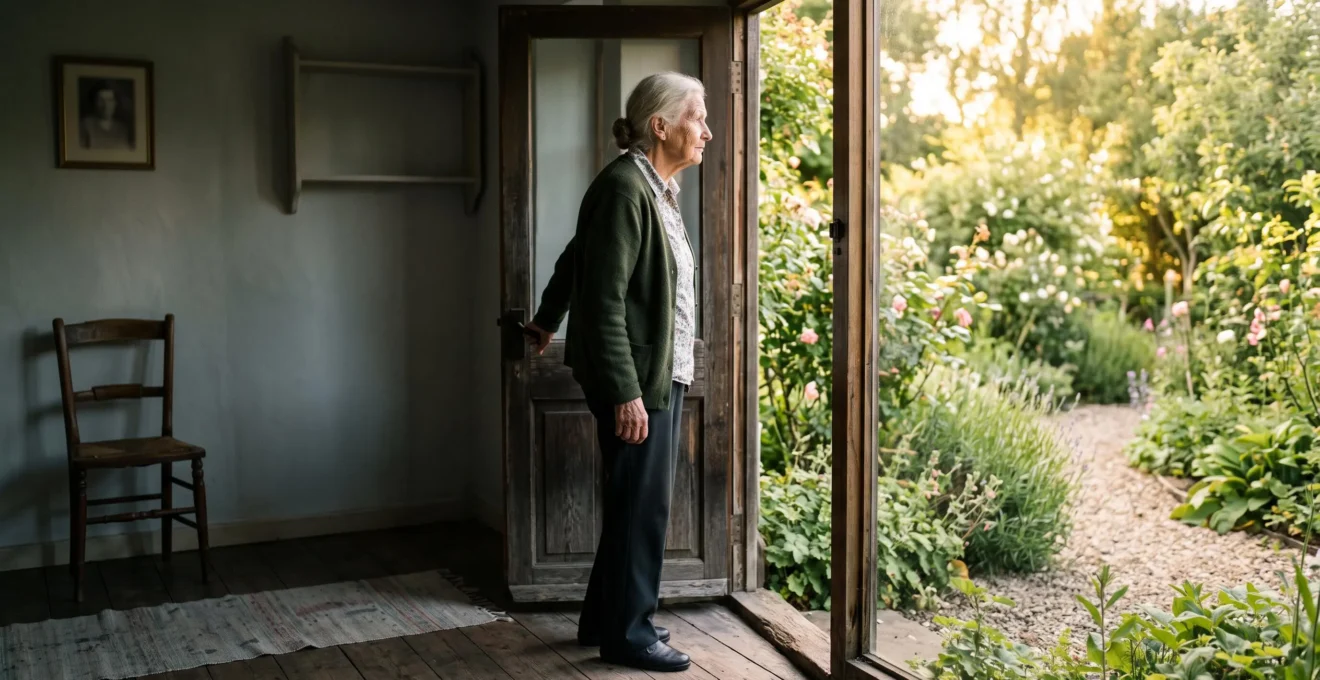
The image above perfectly captures this feeling—not of sadness, but of a quiet, waiting emptiness. The work of positive aging is to intentionally furnish this space with new purpose, fresh learning, and deep connections, transforming the emptiness into a peaceful, fulfilling solitude.
The journey to a flourishing later life is not about finding a magical cure for aging’s challenges. It’s about a conscious, intentional decision to build the mental and emotional structures that will support you. It’s about becoming the architect of your own wellbeing. Start today by choosing one small practice—savoring your morning coffee, identifying one strength, or taking the first step towards a new learning project—and lay the first plank of your positive scaffolding.