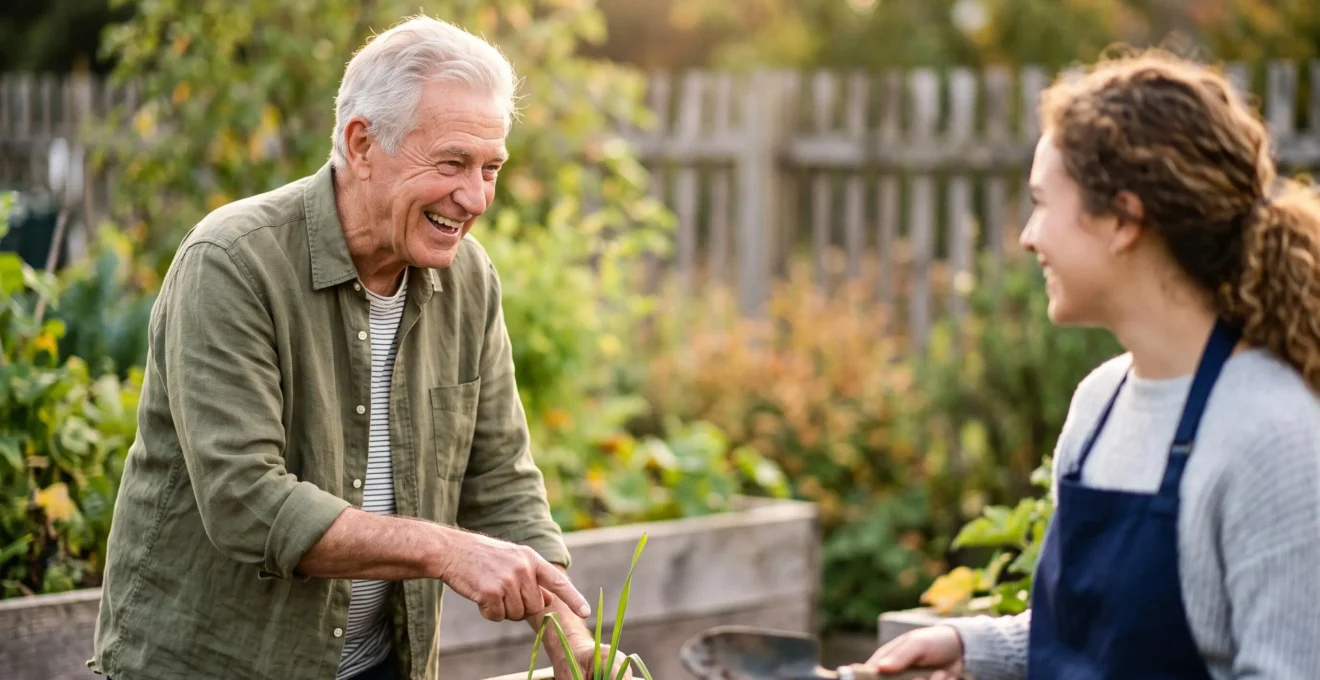
The common belief that retirement is for guarding your time is flawed; science shows that strategically giving it away is the key to a longer, healthier life.
- Volunteering triggers a “helper’s high,” releasing chemicals that reduce stress and mortality risk by up to 24%.
- Consistent, other-oriented contribution (around 2 hours/week) provides far greater health benefits than sporadic, self-focused efforts.
Recommendation: Instead of looking for ways to fill time, start by identifying a cause you care about to build a sustainable “contribution portfolio.”
Retirement presents a paradox. After decades of work, you’ve finally earned the freedom to manage your own time. Your health may be good, your finances secure, but an unexpected feeling can creep in: a sense of emptiness, a lack of direction. Many believe the solution is to fill this new-found time with leisure and self-care. But what if the most powerful route to a fulfilling and even longer life in retirement lies in a counter-intuitive act: giving your time away for free?
This isn’t just a feel-good platitude. A growing body of scientific evidence reveals the specific biological and psychological mechanisms that translate unpaid service into tangible health outcomes. It goes far beyond simply “staying busy.” The act of contributing to a cause greater than oneself provides a unique form of cognitive scaffolding, replacing the structure and purpose of a career. This article unpacks the science behind this phenomenon. We will explore not just *that* it works, but *how* it works—from the chemical reactions in your brain to the precise patterns of engagement that yield the greatest benefits for your longevity and well-being.
To fully grasp how volunteering can transform your retirement, it’s helpful to understand the different facets of a well-lived life. This guide is structured to walk you through the core problem of retirement emptiness, the scientific framework for well-being, and the practical ways to leverage volunteering for a longer, more meaningful life.
Summary: Why Giving Your Time Away for Free Actually Makes You Live Longer?
- Why Can Good Physical Health Still Leave You Feeling Empty in Retirement?
- What Are the 6 Dimensions of Wellbeing and Why Does Neglecting Any One Affect the Others?
- What Happens in Your Brain and Body When You Regularly Help Others Without Pay?
- What Does Regular Club Attendance Actually Do for Your Brain, Heart, and Immune System?
- 2 Hours Weekly or One Intensive Project: Which Volunteer Pattern Benefits You Most?
- How to Find Volunteering That Uses Your Professional Skills Without Overwhelming Your Energy?
- Why Do Enthusiastic New Volunteers Often Burn Out Within 6 Months?
- How to Keep Contributing When Physical Limitations End Your Previous Volunteer Role?
Why Can Good Physical Health Still Leave You Feeling Empty in Retirement?
For many, retirement is the long-awaited reward for a life of hard work. You’ve diligently saved, maintained your physical health, and now possess an abundance of free time. Yet, an unsettling quiet can descend. The daily routines, the professional identity, the casual camaraderie of the workplace—all the structural elements that once defined your days—have vanished. This void can leave you feeling adrift and unmoored, even if your annual physical exam comes back with flying colors. This feeling of emptiness isn’t a personal failing; it’s a predictable consequence of an unbalanced approach to well-being.
The modern focus on retirement planning often over-emphasizes financial and physical health, treating them as the sole pillars of a successful later life. While essential, they are incomplete. A person is not just a body to be maintained or a portfolio to be managed. We are social, intellectual, and spiritual beings who crave meaning and contribution. Without these, even the most physically fit and financially secure retiree can experience a profound sense_of purposelessness. The structure of a 40-hour work week, for all its stresses, provided a built-in sense of purpose, a reason to get up in the morning. In its absence, we must consciously build a new one.
As the illustration suggests, standing in a wide-open space of freedom can feel isolating without a map or a destination. The key is to understand that this emptiness is a signal. It’s an invitation to look beyond the physical and financial and to actively cultivate the other, often-neglected dimensions of a truly whole and healthy life. It’s in this search for a new ‘map’ that the role of meaningful contribution, like volunteering, becomes not just a nice-to-have, but an essential component of well-being.
What Are the 6 Dimensions of Wellbeing and Why Does Neglecting Any One Affect the Others?
The feeling of emptiness in retirement, despite good physical health, can be explained by the Six Dimensions of Wellness model. This framework, often visualized as a wheel, posits that true well-being is more than the absence of disease. It’s a dynamic and interconnected state achieved by nurturing six key areas of your life. Neglecting any one of these dimensions can throw the entire system out of balance, causing the wheel to feel wobbly and unstable, no matter how strong one or two spokes may be.
This model is particularly relevant for aging adults, as the transition to retirement often disrupts several dimensions simultaneously. As highlighted in a comprehensive review on wellness and cognition, this imbalance has cascading effects on overall health. The six dimensions are:
- Physical: Encompassing bodily health, nutrition, movement, and energy levels.
- Emotional: Involving the awareness, acceptance, and management of one’s feelings.
- Social: Pertaining to connection, a sense of belonging, and contributing to one’s community.
- Intellectual: Relating to creativity, problem-solving, learning, and mental stimulation.
- Spiritual: Centered on finding meaning, values, and a sense of purpose.
- Occupational: Gaining personal satisfaction and enrichment from one’s work or contribution, which in retirement must be redefined beyond paid employment.
When a career ends, the Occupational, Social, and Intellectual dimensions are often hit the hardest. The daily problem-solving, team interactions, and sense of contributing to a larger goal disappear. This is precisely why focusing solely on the Physical dimension through exercise and diet is often insufficient. Without the social connection and sense of purpose that volunteering can provide, the wellness wheel remains incomplete, leading to that persistent feeling of something being ‘off’.
What Happens in Your Brain and Body When You Regularly Help Others Without Pay?
The profound sense of satisfaction from helping others isn’t just a psychological phenomenon; it’s a powerful biological event. When you engage in altruistic acts, your brain’s reward system activates in a way that is distinctly different from simply receiving a gift or experiencing a personal pleasure. This process triggers a cascade of neurochemical changes that have direct, measurable benefits on your physical health and longevity, a phenomenon sometimes called the “helper’s high.”
This involves the release of a trio of powerful chemicals:
- Dopamine: The “reward” chemical, providing a feeling of pleasure and reinforcement, which makes you want to repeat the helping behavior.
- Oxytocin: Often called the “bonding hormone,” it’s released during social connection and promotes feelings of trust and empathy, reducing anxiety.
- Endorphins: The body’s natural painkillers, which create a sense of euphoria and well-being.
This neurochemical cocktail does more than just make you feel good in the moment. It actively counteracts the physiological effects of stress by lowering levels of the hormone cortisol. The long-term health impact is stunning. A landmark meta-analysis revealed that older adults who volunteer have a significantly 24% lower risk of mortality than non-volunteers, even after adjusting for factors like prior health status, age, and social support. This isn’t just about happiness; it’s about a fundamental shift toward what experts call eudaimonic well-being—a sense of purpose and meaning that directly fuels physical resilience. As happiness researcher Barbara L. Fredrickson notes, “We know from many studies that both forms of well-being are associated with improved physical and mental health.”
What Does Regular Club Attendance Actually Do for Your Brain, Heart, and Immune System?
While individual acts of kindness are beneficial, the health rewards are magnified when they occur within a structured, social context like a club or a regular volunteer group. Consistent social engagement provides what can be described as “cognitive scaffolding”—a predictable routine and set of social expectations that help structure your time and mind, replacing the framework once provided by a career. This regularity doesn’t just combat loneliness; it provides a powerful, ongoing stimulus for your entire physiological system.
Engaging regularly with a group challenges your brain to remember names, follow conversations, and coordinate activities, which builds cognitive reserve. The social support and laughter inherent in these settings help lower blood pressure and reduce stress on the cardiovascular system. But perhaps most profoundly, the motivation behind your engagement plays a critical role. It’s not just *that* you show up, but *why*. A fascinating study following respondents for four years found that only 1.6% of those who volunteered for other-oriented reasons died, compared to 4.3% of non-volunteers. The mortality rate for those who volunteered for self-oriented reasons was nearly as high as those who didn’t volunteer at all. This suggests that genuine altruism, often fostered in community settings, is the key ingredient for unlocking the longevity benefit.
The positive impact on mental health is particularly well-documented. As the Mayo Clinic Health System states, this kind of regular, purposeful social interaction is a powerful antidote to the isolation that can accompany retirement.
Research also has shown that volunteering leads to lower rates of depression and anxiety, especially for people 65 and older.
– Mayo Clinic Health System, 3 health benefits of volunteering
This combination of mental stimulation, social bonding, and purposeful action creates a virtuous cycle. Regular attendance at a club or volunteer organization directly nourishes the Social, Intellectual, and Spiritual dimensions of your well-being, leading to a healthier brain, a stronger heart, and a more robust immune system.
2 Hours Weekly or One Intensive Project: Which Volunteer Pattern Benefits You Most?
Once you’re convinced of the benefits, the next logical question is one of rhythm and dosage: Is it better to commit to a steady, weekly routine or to pour your energy into a single, intensive project? The research points toward a clear answer: consistency trumps intensity. While a one-off, high-effort project can be deeply rewarding, the most significant and lasting health benefits come from a regular, sustained pattern of giving back.
The “sweet spot” for longevity benefits appears to be a surprisingly manageable amount of time. Research has found a threshold effect, suggesting that dedicating around 100 hours per year, or approximately two hours per week, is associated with the greatest health gains. Below this level, the benefits are less pronounced, and interestingly, significantly exceeding it doesn’t necessarily add more health advantages and can even increase the risk of burnout. This consistent, two-hour-a-week commitment provides a reliable anchor in your schedule, a small but steady infusion of purpose and social connection that your brain and body come to anticipate.
Think of it as the difference between being a gardener and a builder. The builder erects a structure in an intense burst of activity and then moves on. The gardener, however, tends to their plants with small, regular acts of watering and care. It is this gentle, consistent nurturing that allows life to flourish over the long term. Data from the Wisconsin Longitudinal Study supports this “gardener” approach, finding that the protective effect of volunteering against mortality was most pronounced among those who contributed regularly and frequently, rather than in sporadic, intense bursts.
How to Find Volunteering That Uses Your Professional Skills Without Overwhelming Your Energy?
One of the most effective ways to volunteer is to leverage the decades of professional expertise you’ve accumulated. This “skills-based” volunteering is deeply satisfying because it allows you to make a high-impact contribution while engaging parts of your brain that have been honed over a lifetime. However, there’s a common pitfall: diving back into a role that mirrors the high-stress, high-demand environment you just left. The goal is to find a role that uses your skills without consuming your energy, turning your passion into a chore.
The key is a thoughtful and strategic approach. Instead of simply signing up for the first available generic task, you need to translate your career into a sustainable volunteer role. This involves a process of self-assessment and clear communication with the non-profit organization. You are not looking for a job; you are building a “contribution portfolio” that works for your new phase of life. Finding the right fit is about matching your expertise to a real need, but on your own terms. It’s about shifting from an operational “doer” to a strategic “advisor,” mentor, or project specialist.
This transition requires a deliberate process to ensure the role energizes you rather than drains you. By carefully scoping the commitment upfront, you can protect your time and energy while still delivering immense value.
Your Action Plan: Finding a Sustainable Skills-Based Role
- Inventory Your Core Skills: List the professional abilities you most enjoyed using (e.g., project planning, budget analysis, public speaking, mentoring). Focus on transferable skills, not just job titles.
- Seek Advisory Roles First: Instead of taking on day-to-day operational tasks, propose an advisory or mentoring capacity. This allows you to contribute your wisdom without getting bogged down in execution.
- Conduct a “Time and Energy” Interview: Before committing, be explicit with the volunteer coordinator. Ask: “What is the expected number of hours per week?” and “What is the typical communication cadence (e.g., daily emails, weekly meetings)?”.
- Propose a Trial Period: Suggest a 3-month trial or a single project to start. This allows both you and the organization to assess the fit without a long-term, high-pressure commitment.
- Define Your “No-Go” Zones: Be honest about what parts of your former career caused you stress. If you hated managing staff or dealing with last-minute crises, make it clear you are not looking for a role that involves those elements.
Key takeaways
- True well-being in retirement requires balancing six life dimensions, not just physical and financial health.
- Volunteering provides a “helper’s high” that measurably reduces mortality risk, but only when motivations are genuinely other-oriented.
- A consistent rhythm of about two hours per week offers the optimal health benefit, and it’s crucial to adapt your role as physical abilities change.
Why Do Enthusiastic New Volunteers Often Burn Out Within 6 Months?
The initial rush of enthusiasm for a new volunteer role is a powerful force. You’re energized by a new purpose, meeting new people, and making a difference. Yet, all too often, that initial flame flickers and dies within the first year. This isn’t because the volunteer has lost their passion for the cause; it’s a systemic problem known as volunteer burnout, and it stems from a mismatch between good intentions and organizational capacity.
Non-profit organizations, often operating with limited resources, can inadvertently overwhelm their most dedicated volunteers. The problem is so widespread that a 2024 study found that 95% of nonprofit leaders worry about volunteer and staff burnout, with 76% stating it’s already impacting their ability to achieve their mission. Burnout happens when the emotional and time demands of the role exceed an individual’s capacity to cope. This is especially true for retirees who, eager to contribute their skills, may take on responsibilities that replicate the stress of their former careers without the accompanying salary and support structures.
The emotional toll can be immense, particularly in roles that involve direct contact with difficult situations. A study of volunteers during Hurricane Harvey found that while their work provided a powerful sense of personal achievement, it also came with significant emotional demands that required resilience. The most poignant descriptions of burnout, however, come from those who have witnessed it firsthand.
I have watched people I admire deeply disappear from organizations they loved, not because the cause stopped mattering to them but because the organization consumed them without noticing.
– Good People Map
This “consumption” happens when there’s a lack of clear boundaries, insufficient recognition, and a failure to match the volunteer’s skills and energy to the right tasks. Recognizing the signs of burnout—exhaustion, cynicism, and a reduced sense of accomplishment—is the first step to creating a sustainable path for contribution that can last for years, not just months.
How to Keep Contributing When Physical Limitations End Your Previous Volunteer Role?
For many long-term volunteers, one of the most difficult transitions comes when a physical limitation or health issue makes it impossible to continue in a cherished role. The volunteer who once built houses for Habitat for Humanity can no longer swing a hammer, or the museum docent who led tours for hours can no longer stand for long periods. This can trigger a profound sense of loss and a feeling that one’s ability to contribute has ended. This is a critical juncture where many unfortunately drop out of volunteering altogether, losing the very health benefits they had been enjoying.
The data reveals a stark and concerning reality. The English Longitudinal Study of Ageing found that while able-bodied volunteers had a significantly reduced risk of death, this survival advantage disappeared for volunteers who became disabled. This suggests that when people stop their volunteer activities due to physical limitations, they lose the protective effects of social integration and purpose. The challenge, therefore, is not to stop contributing, but to *pivot* the nature of that contribution. This requires a conscious re-imagining of what it means to be a volunteer, moving from a “doer” to a “guide,” from physical labor to intellectual or emotional support.
Hope and inspiration can be found in studies of the oldest adults. The Georgia Centenarian Study found that over 40% of adults were still volunteering in their 80s and 90s, long after their most physically demanding roles were behind them. They adapted. The former builder becomes a mentor for a young apprentice. The former docent starts writing newsletter articles from home. The key is to build a diversified “contribution portfolio” early on—a mix of activities that don’t all rely on the same physical abilities. By cultivating roles that leverage wisdom, experience, and connection, you can create a resilient model of service that can weather the inevitable physical changes of aging and continue to provide purpose and health benefits for the rest of your life.
Building a fulfilling, healthy, and long life in retirement is not about idleness, but about intentional contribution. It’s about understanding that your well-being is an interconnected system and that by giving your time and talent to others, you are investing directly in your own health. The first step is to move beyond the search for ways to simply ‘fill your time’ and begin thoughtfully designing a ‘contribution portfolio’ that aligns with your values and energizes your spirit. Evaluate what truly matters to you and explore local organizations where you can make a difference, starting with just two hours a week.