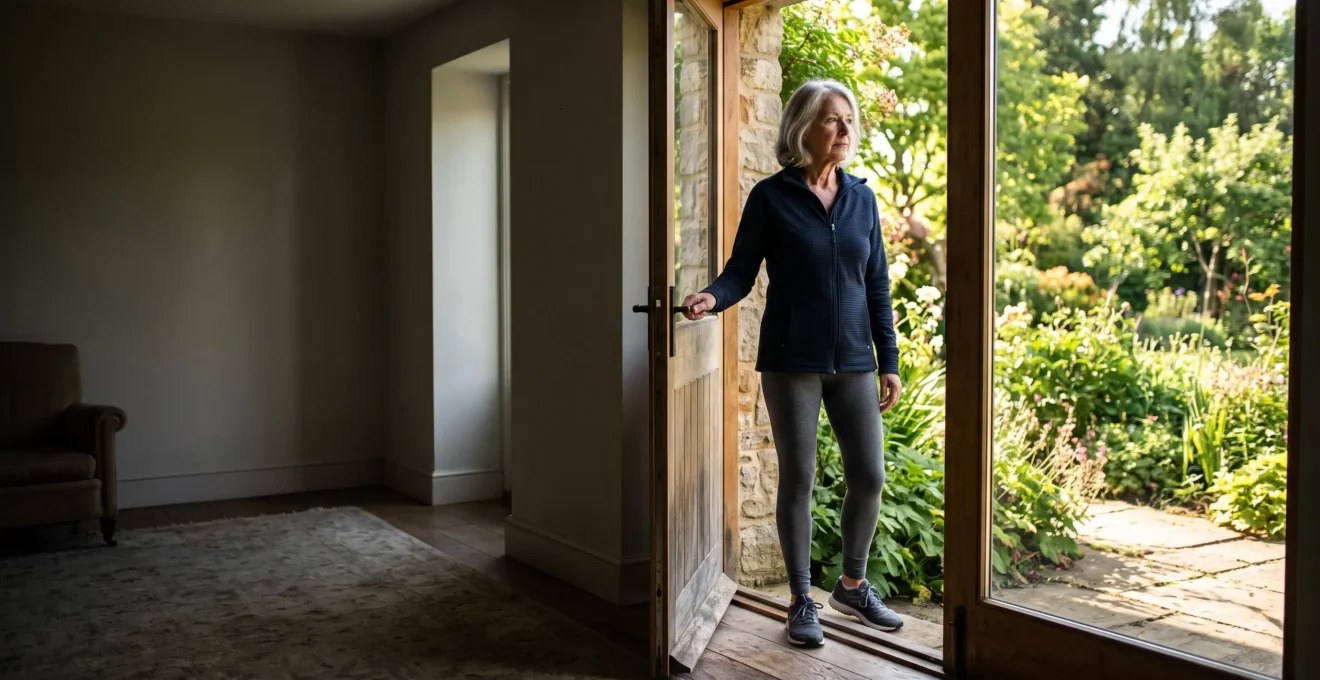
The real challenge in retirement isn’t just maintaining physical health, but rebalancing your entire “wellness portfolio” to find renewed purpose.
- Physical health is only one of six interconnected dimensions of well-being; neglecting others (like social, intellectual, or spiritual) creates a void that physical fitness cannot fill.
- Shifting focus from generic hobbies to intentional “Purpose Projects” aligned with your values is the key to achieving deep life satisfaction after a career.
Recommendation: Begin with a personal “dimensional audit” to diagnose which areas of your life need nourishment, providing a clear roadmap for building a truly fulfilling retirement.
You’ve done everything right. You followed the advice, ate well, stayed active, and your annual check-ups are sterling. By all objective measures, you are a model of healthy aging. Yet, in the quiet moments between appointments or activities, a persistent question surfaces: “Is this it?” This feeling of emptiness, a hollow ache despite a healthy body, is a common but rarely discussed paradox of modern retirement. It’s a profound dissonance between your physical vitality and your emotional or spiritual satisfaction.
Well-meaning friends and countless articles suggest familiar remedies: get a new hobby, volunteer, travel more, join a club. While these activities can be enjoyable, they often act as temporary distractions rather than lasting solutions. They are attempts to fill time, but they may not fill the deeper void. The truth is, this feeling of emptiness is not a personal failure; it is a vital signal. It indicates that the intricate “psychological scaffolding”—the career, the deadlines, the professional identity, the role of raising a family—that once gave your life structure and meaning has been dismantled, leaving your overall sense of well-being out of balance.
This article moves beyond surface-level advice to offer a more profound framework. We will not give you a simple to-do list. Instead, we will guide you through a diagnostic process to understand the root of this emptiness. We will explore the six interconnected dimensions of well-being, help you audit your own “wellness portfolio,” and provide strategies to intentionally nourish not just your body, but your mind and spirit for a retirement that is not just long, but deeply meaningful.
To navigate this journey of self-discovery, it’s helpful to have a clear map. The following sections break down the core components of building a life that feels as good on the inside as it looks on the outside, guiding you from diagnosis to a practical design for holistic well-being.
Summary: Rebuilding Your Inner Scaffolding for a Fulfilling Retirement
- What Are the 6 Dimensions of Wellbeing and Why Does Neglecting Any One Affect the Others?
- How to Audit Your Overall Wellbeing to Spot the Dimension Dragging Everything Down?
- Physical Activities, Social Engagement, or Purpose Projects: Which Improves Overall Wellbeing Most?
- Why Does Physical Comfort Not Equal Life Satisfaction After 70?
- What Is Positive Psychology and Why Does It Matter More as You Get Older?
- What Makes Preventive Gerontology Different From Normal Healthy Living Advice?
- Why Does Focusing on What’s Wrong Actually Make Your Life Worse at 70?
- How to Design a Daily Routine That Feeds Your Body, Mind, and Spirit Without Taking All Day?
What Are the 6 Dimensions of Wellbeing and Why Does Neglecting Any One Affect the Others?
The feeling of being “healthy” is often narrowly defined by physical metrics: blood pressure, cholesterol levels, and mobility. However, true well-being is a far more complex and interconnected system. Think of it not as a single pillar, but as a dynamic structure supported by six essential dimensions. When one dimension is weak, the entire structure can feel unstable, no matter how strong the others are. These six dimensions are:
- Physical: The health of your body—nutrition, exercise, sleep, and preventive care. This is the dimension you have likely mastered.
- Emotional: The ability to understand, manage, and express your feelings effectively, and to cope with challenges.
- Social: The sense of connection, belonging, and having a supportive network of relationships.
- Intellectual: The drive to engage in creative and mentally stimulating activities, expanding your knowledge and skills.
- Spiritual: The search for meaning, purpose, and a sense of connection to something larger than oneself. This is not necessarily religious.
- Occupational/Purpose: The personal satisfaction and enrichment derived from one’s work or primary daily activities, which in retirement must be redefined.
The key insight is that these dimensions are not isolated silos. They constantly interact and influence one another. For example, chronic loneliness (a deficit in the social dimension) can have a devastating impact on physical health. A study in the Journal of the American Heart Association revealed that socially isolated older adults face a 29% higher risk of cardiovascular death. Your physical health doesn’t exist in a vacuum; it is deeply affected by your emotional state, your social connections, and your sense of purpose. The emptiness you feel is often the result of this imbalance—a well-tended physical dimension being dragged down by neglected needs elsewhere.
How to Audit Your Overall Wellbeing to Spot the Dimension Dragging Everything Down?
Once you accept that well-being is a multi-dimensional portfolio, the next logical step is to assess your assets. A “wellbeing audit” is not about self-criticism; it’s a powerful diagnostic tool for self-awareness. It’s about moving from a vague sense of dissatisfaction to a clear understanding of which specific areas of your life are thriving and which require intentional nourishment. Just as a business reviews its finances, you can review your life’s “balance sheet” to make strategic investments in your own fulfillment.
This process transforms you from a passive recipient of your circumstances into an active architect of your life. It involves a quiet, honest reflection on each of the six dimensions. You are not looking for perfection, but for patterns. Where do you feel energized? Where do you feel drained? Where is there a clear and obvious gap between your current reality and your desired state? This audit provides the data you need to stop guessing and start designing a life that is truly balanced and satisfying from the inside out.
Your 5-Step Wellbeing Audit
- Inventory Your Inputs: For each of the six dimensions (Physical, Emotional, Social, Intellectual, Spiritual, Purpose), list all the activities, relationships, and routines you currently engage in. Be brutally honest.
- Collect Emotional Data: Review your inventory and assign a simple feeling to each item: “Energizing,” “Draining,” or “Neutral.” Note which dimensions are filled with energizing activities versus draining ones.
- Assess for Coherence: Compare this inventory to your core values. Does your social life reflect your value of deep connection, or is it filled with superficial obligations? Does your intellectual life challenge you, or is it passive consumption?
- Spot the Voids: Identify the dimension with the fewest activities, the most “Draining” labels, or the biggest gap with your values. This is likely the primary source of your feeling of emptiness.
- Create a “Nourishment Plan”: For the one or two most neglected dimensions, brainstorm one small, concrete action you can take this week to “invest” in them. Don’t try to fix everything at once; start with a single, strategic move.
Physical Activities, Social Engagement, or Purpose Projects: Which Improves Overall Wellbeing Most?
After your audit, you might be tempted to simply “do more” in a weak dimension—join a gym, call more friends, sign up for a class. But the *quality* and *nature* of the activity matter more than the activity itself. While physical activity is essential and social engagement is crucial, “Purpose Projects” often provide the most significant boost to overall well-being, especially for those who have lost the structure of a career.
What’s the difference? A hobby is something you do for pleasure. A Purpose Project is something you do that aligns with your values, utilizes your strengths, and often contributes to something beyond yourself. It could be mentoring a young entrepreneur, mastering a complex skill like coding or a musical instrument, documenting family history, or spearheading a community garden. These projects directly feed the core psychological needs that work used to satisfy: autonomy (you’re in control), competence (you’re building mastery), and relatedness (you’re connecting with others or a cause).
This isn’t just a philosophical idea; it’s backed by decades of research in human motivation. As psychologists Edward Deci and Richard Ryan famously stated in their Self-Determination Theory:
Human beings can be proactive and engaged or, alternatively, passive and alienated, largely as a function of the social conditions in which they develop and function.
– Edward Deci and Richard Ryan, American Psychologist (2000)
A retirement filled with passive consumption or aimless hobbies fails to create the “social conditions” for engagement. A retirement structured around Purpose Projects, however, creates a fertile ground for proactivity and deep satisfaction. The goal isn’t to be busy; it’s to be engaged in something that matters to you.
Why Does Physical Comfort Not Equal Life Satisfaction After 70?
In the first half of life, the pursuit of comfort is a powerful driver: a stable career, a secure home, and a healthy body. We work to eliminate discomfort and create security. However, after 70, once a baseline of physical and financial comfort is achieved, its ability to generate happiness diminishes significantly. This is known as the “hedonic treadmill”—we quickly adapt to comfort, and it ceases to provide a lasting sense of satisfaction. The emptiness felt by many healthy retirees is a direct symptom of reaching the limits of comfort-based living.
At this stage of life, the psychological focus naturally shifts from accumulation and comfort to meaning and legacy. The work of developmental psychologist Erik Erikson is particularly relevant here. He described the core psychosocial crisis of late adulthood as “Integrity vs. Despair.” Integrity is the feeling of a life well-lived, a sense of wholeness and acceptance. Despair is the feeling of regret, of time wasted. The path to integrity is not paved with more comfort, but with contribution, reflection, and making peace with one’s life story. It’s about finding a way to matter in the grander scheme of things.
The poignant quest for meaning in later life is beautifully captured by Erikson’s simple, powerful statement on legacy:
I am what survives me.
– Erik Erikson, Lifespan Development (Lumen Learning)
This isn’t about grand monuments or fame; it’s about the knowledge, values, and love you pass on. It’s the stories you tell, the garden you plant, the wisdom you share with a grandchild. Physical comfort provides a platform for life, but life satisfaction after 70 is built from the meaning you create on that platform.
What Is Positive Psychology and Why Does It Matter More as You Get Older?
For most of its history, psychology focused on what was wrong with people—anxiety, depression, trauma. It was a science of fixing deficits. Positive Psychology, a field that emerged in the late 1990s, represents a revolutionary shift in perspective. It asks a different question: “What is right with people?” It is the scientific study of what makes life most worth living, focusing on strengths, virtues, positive emotions, and optimal functioning.
This is not the same as naive “positive thinking.” It’s a rigorous, evidence-based approach to cultivating what is known as eudaimonic well-being—a sense of fulfillment that comes from living a life of virtue, purpose, and personal growth, as opposed to simple hedonic pleasure. As you get older, this distinction becomes paramount. The opportunities for simple hedonic pleasure may change or diminish, but the capacity for eudaimonic growth is limitless.
Positive Psychology matters more in retirement because it provides a practical toolkit for the work you need to do. When the external structures of work and career fall away, you need to build your internal structures of meaning. This field offers proven interventions for:
- Identifying and Using Your Strengths: Discovering your “signature strengths” (like creativity, curiosity, or kindness) and finding new ways to use them daily is a powerful antidote to feeling useless.
- Cultivating Gratitude: Simple practices like a gratitude journal have been scientifically shown to shift your brain’s focus away from what’s lacking and toward what’s abundant, rewiring your perspective.
- Fostering Optimism: Learning to view challenges as temporary and specific, rather than permanent and pervasive, builds resilience and a sense of agency.
- Nurturing Positive Relationships: It provides frameworks for deepening the quality of your connections, moving beyond superficial contact.
Positive Psychology gives you the permission and the tools to focus on building what’s good, rather than just dwelling on what’s gone.
What Makes Preventive Gerontology Different From Normal Healthy Living Advice?
The term “gerontology” often conjures images of managing decline—treating diseases, preventing falls, and coping with the frailties of old age. This is the traditional, deficit-based model. Preventive Gerontology represents a paradigm shift. It is the proactive science of optimizing the quality of your entire lifespan, not just extending its length. It’s less about avoiding what’s bad and more about actively building what’s good across all dimensions of your being.
Normal healthy living advice focuses primarily on the physical: don’t smoke, eat your vegetables, get 150 minutes of exercise a week. This is crucial, but it’s only one piece of the puzzle. Preventive Gerontology expands the definition of “prevention” to include:
- Preventing social isolation, not just high blood pressure.
- Preventing cognitive stagnation, not just muscle loss.
- Preventing a crisis of meaning, not just a heart attack.
- Preventing despair, not just dementia.
It views your mind, your social network, and your sense of purpose as “muscles” that require regular, intentional exercise to stay strong. It’s about building cognitive and emotional reserves just as deliberately as you build physical strength.
While maintaining physical strength is a cornerstone, Preventive Gerontology argues that your greatest asset in aging well is your sense of agency—your ability to be the author of your own life. It reframes aging from a passive process of enduring decline to an active process of continuous development. It’s the difference between being a passenger on the journey of aging and being the driver, intentionally navigating towards a destination of holistic well-being.
Key takeaways
- Well-being is a multi-dimensional portfolio; physical health is just one asset, and overall satisfaction depends on the health of the entire portfolio.
- True fulfillment in retirement comes from eudaimonic pursuits (purpose, growth, contribution) not just hedonic ones (pleasure, comfort).
- Proactively auditing your life and intentionally designing routines that nourish all six dimensions is the central work of preventive gerontology.
Why Does Focusing on What’s Wrong Actually Make Your Life Worse at 70?
The human brain is naturally wired with a “negativity bias.” For our ancestors, being hyper-aware of threats (a predator in the bushes, a sign of spoilage) was a survival advantage. In modern life, especially in retirement when there is more time for introspection, this bias can become a trap. Focusing on what’s wrong—physical aches, a perceived lack of respect, the state of the world—doesn’t just make you feel bad emotionally; it actively harms you physically and cognitively.
When you ruminate on negative thoughts, your body enters a low-grade but chronic state of “fight or flight.” It releases stress hormones like cortisol, which over time contribute to inflammation, suppress the immune system, and damage cells. This isn’t just theory; it has measurable consequences. Chronic stress and negative emotional states are strongly linked to major health problems. For instance, in the United States, where stress is a significant public health issue, research shows that nearly 46% of U.S. adults have hypertension, a condition exacerbated by chronic stress.
Furthermore, this negative focus can create a self-fulfilling prophecy. Dwelling on loneliness can cause you to withdraw, reinforcing your isolation. Fearing cognitive decline can lead to avoiding mental challenges, which is precisely what accelerates it. As a consensus report from the National Academies of Sciences, Engineering, and Medicine concluded, the chronic stress from social isolation and loneliness is a clear risk factor for a cascade of negative health outcomes, including depression, anxiety, and even dementia. By constantly scanning for and focusing on what’s wrong, you are inadvertently watering the very weeds you want to eliminate, while starving the flowers you wish to grow.
How to Design a Daily Routine That Feeds Your Body, Mind, and Spirit Without Taking All Day?
The goal is not to trade the rigid schedule of a 9-to-5 job for an equally rigid retirement schedule packed with “self-improvement” tasks. The key is to create a rhythm, not a regimen. An effective daily routine provides a supportive structure while leaving ample room for spontaneity and joy. It’s about designing a day with “structured spontaneity,” blending intentional nourishment with the freedom that retirement should offer.
A balanced routine can be built around three core types of “anchor habits”—one for the body, one for the mind, and one for the spirit. These don’t need to be monumental. The power is in their consistency.
- Body Anchor: This is a non-negotiable physical activity. It could be a 30-minute walk after breakfast, a daily stretching sequence, or a gardening session. It anchors your day in physical well-being.
- Mind Anchor: This is a dedicated “curiosity appointment.” It could be 30 minutes spent reading a book on a new subject, working on your Purpose Project, or listening to an intellectually stimulating podcast. It ensures you are actively engaging your brain.
- Spirit Anchor: This is a moment for quiet reflection or connection. It might be a 10-minute morning meditation, journaling, spending time in nature, or a moment of quiet gratitude before a meal. It centers you and connects you to your values.
These three anchors might only take up 90 minutes of your day, but they ensure that the core needs of your body, mind, and spirit are met. The rest of the day is then open for social activities, errands, relaxation, and whatever spontaneous opportunities arise. This approach prevents the day from feeling formless and empty while preserving the sense of freedom you’ve earned.
Your later years are not a postscript to your life, but a new volume waiting to be written with intention and wisdom. The first step is to pick up the pen. Begin your personal well-being audit today and start designing a retirement that is not just healthy, but truly and deeply whole.