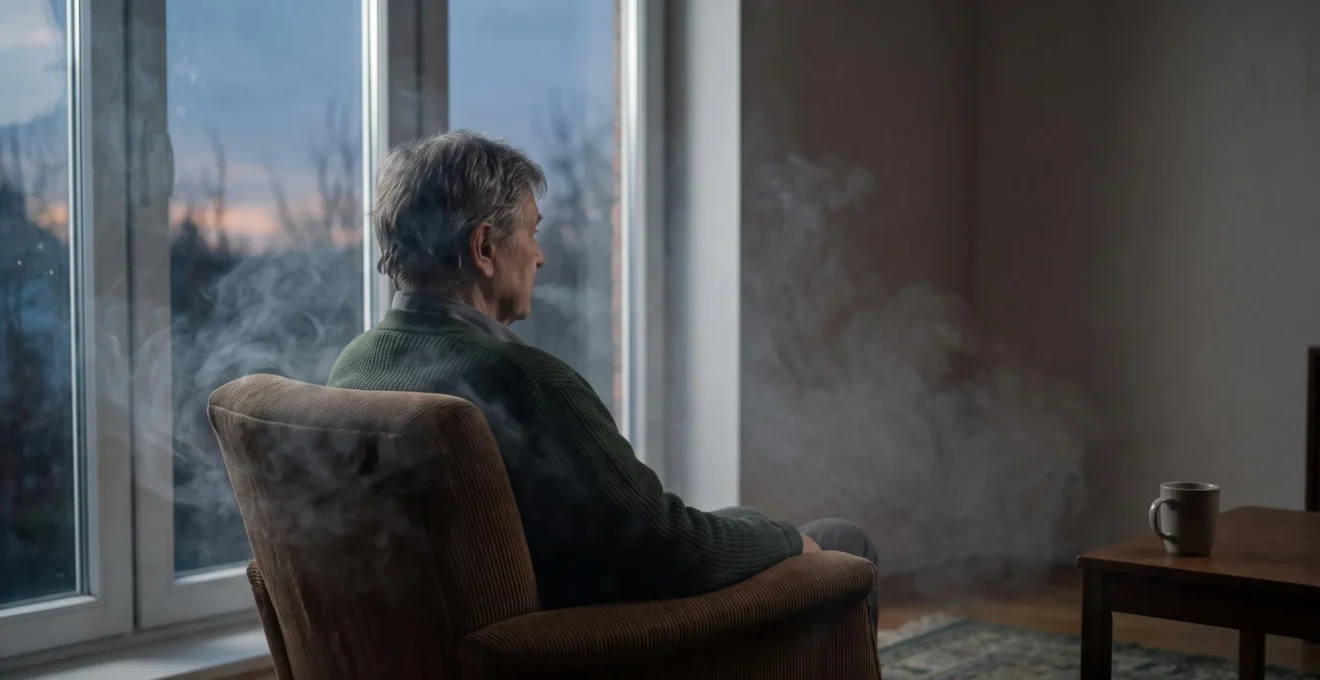
The comparison of chronic loneliness to smoking 15 cigarettes a day isn’t a metaphor; it’s a measure of physiological damage. Loneliness is not simply a state of mind but a biological stressor that actively dismantles the body.
- Chronic isolation dysregulates the body’s stress-response system (the HPA axis), leading to systemic inflammation.
- This inflammation directly contributes to cardiovascular disease, cognitive decline, and a weakened immune system.
Recommendation: Shift your focus from simply “being less lonely” to actively building a diversified “social portfolio” as a critical, long-term health investment, just as you would manage diet or exercise.
The stark declaration that loneliness is as lethal as a heavy smoking habit often feels like an exaggeration. We tend to view loneliness as an emotional problem, a sadness that can be cured with a phone call or a visit. But a cascade of scientific evidence reveals a more alarming truth: chronic isolation is a physiological condition. It triggers a predictable and devastating biological response, a state of high alert that wears the body down from the inside out. This isn’t about feeling sad; it’s about the body’s systems entering a state of chronic emergency.
Common advice—”join a club,” “call an old friend”—while well-intentioned, often fails because it misunderstands the root of the problem. It treats a profound biological state as a simple social deficit. This article moves beyond the platitudes. We will not just tell you that loneliness is dangerous; we will deconstruct the exact mechanisms by which it attacks the body. We will explore the science of how social connection acts as a biological shield, regulating everything from our heart rate to our immune response.
By understanding loneliness not as a feeling but as a physiological state, we can reframe the solution. It’s not about forcing awkward social interactions but about strategically restoring a state of biological balance—what some researchers call “social homeostasis.” This guide will walk you through the physical consequences of isolation, the hidden signs to watch for, and the evidence-based strategies that truly build resilience against this silent epidemic.
This article provides a structured path to understanding and combating the health risks of isolation. The summary below outlines the key topics we will cover, from the biological impact to practical, long-term solutions.
Summary: Why Does Isolation After 65 Increase Death Risk as Much as Smoking 15 Cigarettes Daily?
- What Actually Happens to Your Body When You Spend Most Days Alone?
- How to Spot the Early Signs of Dangerous Isolation in Yourself or a Parent?
- Professional Befriending Services or Joining a Local Club: Which Better Solves Senior Loneliness?
- Why Do Lonely Seniors Often Refuse Invitations Even When They Desperately Want Connection?
- How to Build a Social Safety Net at 60 That Protects You Against Loneliness at 80?
- Why Is Making New Friends After 65 So Hard and What Actually Works to Break the Barrier?
- What Does Regular Club Attendance Actually Do for Your Brain, Heart, and Immune System?
- Why Do Socially Connected 75-Year-Olds Live 7 Years Longer Than Their Isolated Peers?
What Actually Happens to Your Body When You Spend Most Days Alone?
When the mind perceives itself to be socially isolated, it sends a primal danger signal throughout the body. This isn’t just a feeling; it’s the start of a damaging physiological cascade. The body’s central stress response system, the Hypothalamic-Pituitary-Adrenal (HPA) axis, goes into overdrive, continuously flooding the system with the stress hormone cortisol. In short bursts, cortisol is helpful. But when chronic, it acts like a corrosive agent, promoting widespread inflammation. This systemic inflammation is the primary culprit behind the physical toll of loneliness.
The cardiovascular system is often the first to show strain. The constant stress elevates blood pressure and heart rate, putting a relentless burden on arteries and heart muscle. This isn’t a minor effect; research on the cardiovascular toll of chronic isolation shows that social isolation causes a 32% increase in the risk of stroke and a 29% increase in the risk of heart disease. The heart literally suffers from a lack of connection.
This inflammatory response also directly targets the brain. Research from the landmark Framingham Heart Study revealed that individuals experiencing persistent loneliness had a significantly higher risk of dementia over a 10-year period. Brain imaging from this study provided a chilling explanation: loneliness was associated with lower total brain volume and more damage to the brain’s white matter. The brain, like the heart, appears to physically shrink and degrade under the sustained assault of isolation-induced stress.
How to Spot the Early Signs of Dangerous Isolation in Yourself or a Parent?
Dangerous isolation rarely announces itself. It creeps in, disguised as a preference for quiet, a disinterest in old hobbies, or simple fatigue. Because it’s a gradual process, the early warning signs are often dismissed by both the individual and their family. The key is to look for changes in pattern and behaviour, not just overt declarations of loneliness. One of the first signs is a shrinking world. This manifests as a growing list of “no’s”: saying no to invitations, no to trying a new class, or no to a simple walk. The energy required for social interaction feels overwhelming, so the person preemptively withdraws.
Look for a change in communication habits. Are phone calls becoming shorter or less frequent? Is the person harder to reach? This can signal a retreat. Pay attention to their environment: is the home becoming more cluttered or neglected? Are they skipping meals or relying more on low-effort, unhealthy food? These are often signs of apathy and low energy, direct consequences of the physiological toll of isolation. A University of Michigan poll found that the problem is widespread, with 56% of adults ages 50 to 80 reporting feelings of isolation in recent years, making it a critical public health concern to monitor.
Finally, listen for the language of victimhood or helplessness. Phrases like “Nobody calls me anymore,” “What’s the point?” or “I’m just a burden” are significant red flags. They indicate a shift in self-perception from an active participant in life to a passive recipient of circumstances. This mindset is a direct consequence of the cognitive and emotional fatigue that accompanies chronic loneliness.
Your 5-Point Isolation Audit Checklist
- Social Calendar Review: List all social interactions from the past two weeks (calls, visits, outings). Is there a clear decline compared to six months ago? Note which activities have been dropped.
- Communication Log: Track outgoing vs. incoming calls/messages. Is the person initiating contact, or only responding? A passive pattern is a key indicator of withdrawal.
- Activity & Hobby Inventory: List the hobbies and activities that brought joy a year ago. How many are still actively pursued? Note the reasons given for stopping them (e.g., “too tired,” “not interested anymore”).
- Language & Mood Analysis: Over one week, jot down recurring phrases. Count the frequency of negative, hopeless, or self-deprecating statements versus positive or neutral ones. This provides objective data on their emotional baseline.
- Self-Care & Environment Check: Objectively assess changes in personal grooming, meal preparation, and home tidiness. A noticeable decline is a strong sign of diminished energy and motivation linked to isolation.
Professional Befriending Services or Joining a Local Club: Which Better Solves Senior Loneliness?
When seeking solutions for an isolated senior, two common pathways emerge: hiring a professional befriending service or encouraging them to join a local club. While both aim to increase social contact, they operate on fundamentally different principles and have vastly different long-term outcomes. A befriending service provides companionship as a commodity. It’s a scheduled, transactional relationship that, while offering a temporary reprieve from solitude, can inadvertently reinforce a sense of passivity and dependence. The older adult is a recipient of a service, not an active participant in a community.
Joining a local club or group, by contrast, is a more powerful and sustainable intervention because it addresses the core needs that isolation erodes: purpose, agency, and shared identity. A book club, a walking group, a volunteer organization, or a choir isn’t just about being around people; it’s about engaging in a shared activity with a common goal. This shifts the dynamic entirely. The individual is no longer just “an old person who is lonely” but becomes “a tenor,” “a gardener,” “a historian,” or “a volunteer.”
This re-establishment of a valued role is profoundly important. It restores a sense of contributing and belonging that is essential for what scientists call social homeostasis—the body’s state of equilibrium. While a befriender can provide a conversation, a club provides a context and a reason for that conversation. The relationships that form are organic, built on mutual interest, not on a schedule. This organic nature makes them more resilient and more likely to extend beyond the confines of the club meeting itself. While befriending has its place, especially for the very frail or homebound, for most, the path to genuine, lasting connection lies not in receiving companionship, but in co-creating it within a community of shared interest.
Why Do Lonely Seniors Often Refuse Invitations Even When They Desperately Want Connection?
One of the most baffling and painful paradoxes for families is watching an isolated loved one consistently turn down the very invitations that could ease their loneliness. This refusal is rarely about a genuine lack of desire for connection. Instead, it’s a symptom of the deep psychological and physiological toll that chronic isolation has already taken. The lonely brain is a tired brain. The constant low-grade stress and inflammation deplete cognitive and emotional resources, making the prospect of social interaction feel as daunting as running a marathon.
This exhaustion leads to a profound fear of “social performance.” The individual worries they won’t have anything interesting to say, that they’ll be a downer, or that they won’t be able to keep up with the conversation. Social skills, like muscles, atrophy with disuse. After a long period of isolation, the simple act of making small talk can feel like a high-stakes exam for which one is completely unprepared. Saying “no” to an invitation becomes a self-protective measure to avoid the perceived risk of failure and embarrassment.
Furthermore, chronic loneliness can warp self-perception. The person may internalise a narrative that they are a burden to others. In this mindset, accepting an invitation feels like imposing themselves on others, while refusing it feels like a selfless act of sparing others their “boring” or “depressing” company. This internal logic is deeply flawed but feels entirely real to the person experiencing it. Breaking this cycle requires understanding that the refusal isn’t a personal rejection, but a sign of deep-seated fear and fatigue. The solution isn’t bigger invitations, but smaller, lower-stakes, and safer-feeling opportunities for connection.
How to Build a Social Safety Net at 60 That Protects You Against Loneliness at 80?
The fight against loneliness in later life is not won at 80; it’s won at 60. Building a robust social safety net is a proactive, long-term project, much like funding a retirement account. Relying solely on a spouse and a few close work friends is a high-risk strategy. Life events like retirement, relocation, illness, or bereavement can decimate this fragile network overnight. The key to long-term resilience is diversification. This means consciously cultivating a “social portfolio” with different types of connections across various domains of your life.
The urgency for this is clear in the data, which shows that 28% of all older adults aged 65 years or older live alone, a figure that climbs sharply with age. A diversified social portfolio should include:
- The Inner Circle: Close family and lifelong friends who provide deep emotional support.
- Activity-Based Friends: People you connect with through shared hobbies—your walking group, book club, or volunteer team. These connections are vital because they are based on shared purpose and are less emotionally demanding.
- Community Acquaintances: The friendly faces you see regularly—the local barista, the librarian, your neighbours. These “weak ties” are incredibly important for feeling rooted in a community and providing daily, low-stakes social interaction.
Building this portfolio at 60 means consciously investing time in all three areas. It means saying “yes” to joining that committee, making the effort to learn the names of your neighbours, and nurturing friendships outside of your primary relationship. It requires treating your social health with the same seriousness as your financial or physical health. The goal is to create a multi-layered network so that if one part is weakened by life changes, the others can provide the necessary support to maintain your social homeostasis and protect your long-term well-being.
Why Is Making New Friends After 65 So Hard and What Actually Works to Break the Barrier?
The common advice to “just get out there and make new friends” ignores a fundamental reality: the structures that facilitate friendship in youth and mid-life have often disappeared by 65. The three conditions for friendship, as defined by sociologists—proximity, repeated unplanned interactions, and a setting that encourages vulnerability—are the hallmarks of school and the workplace. With retirement, this ready-made friendship factory is dismantled. Suddenly, creating connections requires a level of intentional effort that can feel exhausting and unnatural.
Several barriers emerge. First, there’s the “closure” of social circles. Existing groups of friends can seem impenetrable, with decades of shared history that a newcomer can’t access. Second, there’s the vulnerability hurdle. After a lifetime of being a competent adult, it can feel demeaning to be the “new person” who doesn’t know the rules. Finally, there’s a lack of “third places”—neutral, public spaces where people can gather informally. With the decline of community centers and public squares, opportunities for spontaneous encounters have dwindled.
So, what actually works? The key is to seek out activities built around a shared purpose or passion, rather than “socialising” for its own sake. This shifts the focus from the awkwardness of personal connection to the collaborative task at hand. Consider these strategies:
- Volunteer for a cause you believe in: Working alongside others towards a common goal is a powerful bonding agent.
- Take a class to learn a new skill: Whether it’s pottery, a new language, or coding, the shared struggle of learning creates natural camaraderie.
- Join an activity-based group: A choir, a hiking club, or a community garden forces interaction around a structured activity, lowering the pressure of conversation.
The goal is to let the friendship be a byproduct of the activity, not the goal of the activity itself. This makes the entire process feel less performative and more authentic, creating the ideal conditions for genuine connections to form, even after 65.
Key Takeaways
- Loneliness is a physiological condition, not just an emotion, that triggers a chronic inflammatory stress response.
- The most effective antidote to loneliness is not just social contact, but engagement in activities with a shared purpose, which restores a sense of agency and identity.
- Proactively building a diversified “social portfolio” in your 60s is the most critical preventative health measure you can take to ensure well-being in your 80s.
What Does Regular Club Attendance Actually Do for Your Brain, Heart, and Immune System?
The positive health impact of joining a club goes far beyond simply feeling less lonely. Regular, structured social engagement acts as a powerful regulating force on the body’s core systems, effectively reversing the damage caused by isolation. The primary benefit is the down-regulation of the overactive HPA axis. The predictability of a weekly meeting and the positive social interactions help to reset the body’s stress response, lowering circulating cortisol levels. This, in turn, reduces the chronic inflammation that is so damaging to the cardiovascular system.
The Physiological Pathway from Connection to Health
A comprehensive physiological review provided a clear scientific pathway explaining how social connection protects the body. The review found that isolation consistently leads to the over-activation of the HPA axis (the body’s central stress system), increased heart rate, and a pro-inflammatory immune response. Conversely, regular social engagement helps regulate this system, calming sympathetic nerve activity and restoring parasympathetic function (the “rest and digest” system). This directly explains how a predictable, socially anchored routine like a weekly club meeting can lower baseline cardiovascular strain and buffer the body against stress.
Furthermore, positive social interactions trigger the release of beneficial neurochemicals. The most notable of these is oxytocin, often called the “bonding hormone.” Oxytocin not only promotes feelings of trust and attachment but also has powerful anti-inflammatory effects and plays a role in cardiovascular health. A longevity research review highlights how hormones like oxytocin and even the gut microbiome are key mediators of social connection’s life-extending benefits. Engaging with a group also provides gentle cognitive stimulation, forcing the brain to navigate social cues, remember names, and follow conversations. This acts as a regular workout for the brain’s executive functions, helping to build cognitive reserve and protect against decline.
In essence, a club membership is a prescription for better health. It’s a weekly dose of anti-inflammatory, cardio-protective, and neuro-protective activity. The routine provides the structure the nervous system craves, and the social bonds provide the chemical signals that tell the body it is safe, secure, and part of a tribe.
Why Do Socially Connected 75-Year-Olds Live 7 Years Longer Than Their Isolated Peers?
The striking difference in life expectancy between socially connected and isolated individuals is the cumulative result of the biological processes we’ve discussed. It is the final, stark metric that proves social connection is a cornerstone of health, on par with genetics and lifestyle choices. Years of elevated cortisol, systemic inflammation, and high blood pressure inevitably lead to an earlier onset of chronic, life-limiting diseases—heart disease, stroke, diabetes, and dementia. Socially connected individuals are simply better buffered against these outcomes.
The scale of this effect is not trivial. A foundational meta-analysis of prospective studies found that participants with strong social connections experienced 50% greater odds of survival over the study periods compared to their isolated peers. This effect was found to be comparable to quitting smoking and even greater than the health risks of obesity or physical inactivity. The message is unequivocal: a lack of social connection is a primary mortality risk factor.
These connections provide more than just a buffer against stress; they actively promote health-seeking behaviours. Friends and family encourage each other to see a doctor, to eat healthier, and to stay active. They provide practical support during illness, like driving to an appointment or picking up groceries, which can be the difference between successful recovery and a downward spiral. A socially connected person is part of a web of mutual care. This web not only mitigates the direct physiological damage of loneliness but also creates a resilient support system that dramatically improves health outcomes and, as a result, extends life. The extra years of life are not a magical bonus; they are the logical, biological dividend of a lifetime of social investment.
Now that the mechanisms and stakes are clear, the next step is to move from understanding to action. The most effective approach is to begin building and reinforcing your social safety net today, not waiting for a crisis to strike. Start by evaluating your own “social portfolio” and identifying one small, concrete step you can take this week to strengthen a connection or explore a new one.