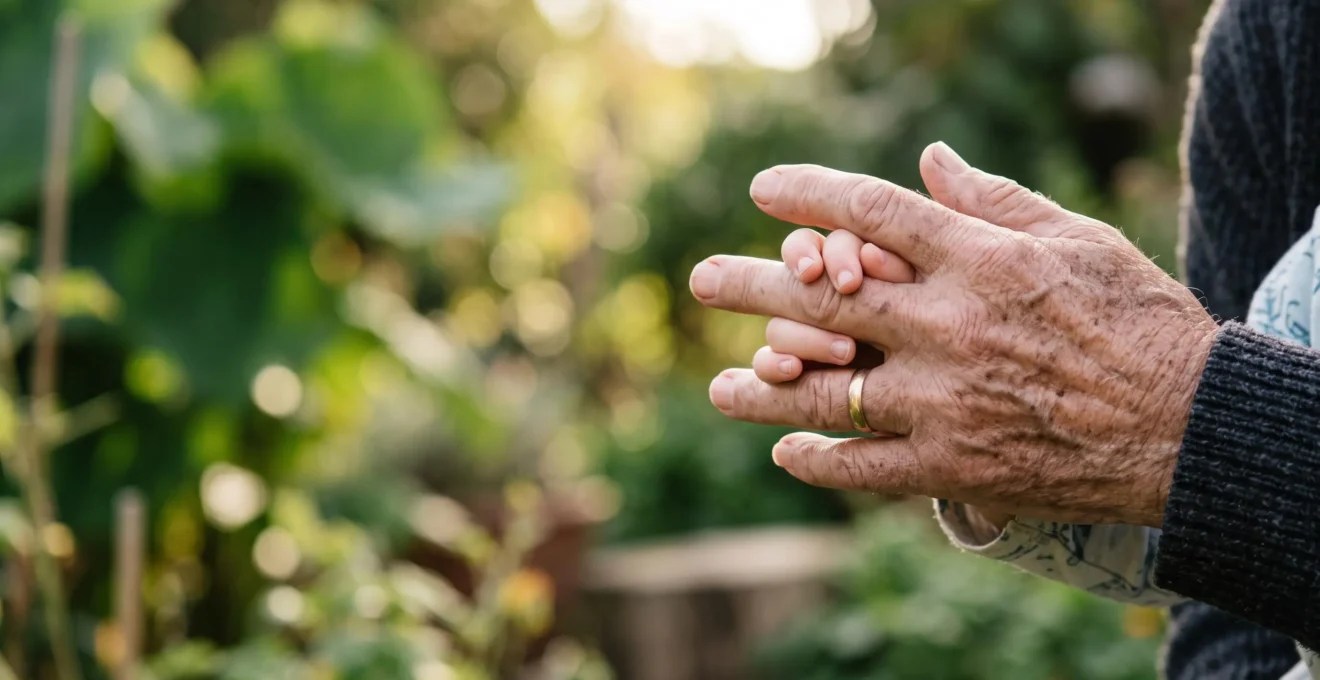
The cognitive benefits of intergenerational bonds stem from the mental “work” of bridging the age gap, not just passive time spent together.
- Engaging with younger people provides novel cognitive challenges and fresh perspectives that same-age peers often cannot.
- Structured activities like volunteering or mentorship offer powerful pathways to connection, even without family nearby.
Recommendation: Actively seek opportunities for “cognitive cross-training” by becoming both a mentor and a student to younger generations.
The image of a grandparent joyfully playing with a grandchild is a universal symbol of happiness. We intuitively understand this connection is good for the soul. But what if its most profound benefit was not emotional, but neurological? While common wisdom suggests these interactions keep you “young at heart” by encouraging physical activity or providing a sense of purpose, this view barely scratches the surface. It often overlooks the potent, and sometimes challenging, mental workout these relationships provide.
The true power lies beyond simple babysitting or trips to the park. It’s found in the complex, demanding, and constant act of bridging a generational divide. This isn’t just about feeling needed; it’s about being cognitively challenged in a way that interactions with same-age peers simply cannot replicate. The key to unlocking a sharper, more resilient brain in later life might not be in the quiet comfort of familiarity, but in the vibrant, sometimes chaotic, world of a different generation.
This article moves beyond the platitudes to explore the specific mechanisms at play. We will examine why these connections are a form of high-intensity cognitive cross-training, how to forge them even without grandchildren, and how to navigate the communication gaps. We will uncover the science that transforms a simple conversation into a powerful tool for brain health, revealing how these relationships help fortify your mind against the challenges of aging.
To understand the full scope of these benefits, this article is structured to guide you from the foundational “why” to the practical “how.” Explore the sections below to uncover the unique cognitive gifts of intergenerational connection.
Summary: The Grandchild Effect: Unpacking the Neurological Benefits of Intergenerational Bonds
- What Do Young People Give You That Same-Age Peers Cannot Provide?
- How to Connect With Younger Generations When You Don’t Have Grandchildren Nearby?
- How to Talk With 25-Year-Olds Without Feeling Judged or Irrelevant?
- How to Share Your Life Experience Without Sounding Like a Lecturing Grandparent?
- How to Let Your Grandchildren Teach You Technology Without Feeling Incompetent?
- Weekly Club Meeting or Daily Brief Chats: Which Social Pattern Benefits Health More?
- What Happens in Your Brain and Body When You Regularly Help Others Without Pay?
- Why Do Socially Connected 75-Year-Olds Live 7 Years Longer Than Their Isolated Peers?
What Do Young People Give You That Same-Age Peers Cannot Provide?
While friendships with peers offer invaluable shared history and understanding, interactions with younger generations provide something entirely different: novelty and cognitive dissonance. Your brain, accustomed to the cultural shorthand and shared references of your own cohort, is forced to work harder when communicating with someone decades younger. This isn’t a flaw; it’s a feature. This process of “generational translation”—explaining your world and trying to understand theirs—is a powerful form of cognitive exercise. You are constantly decoding new slang, grasping unfamiliar social contexts, and re-evaluating your own assumptions.
This mental effort stimulates neuroplasticity, the brain’s ability to form new neural connections. Unlike the comfortable rhythm of a conversation with a lifelong friend, talking to a young adult requires active problem-solving. It’s a form of cognitive cross-training that engages different mental muscles. The benefit isn’t just in the time spent, but in the nature of the engagement. As one researcher noted, the cognitive benefits are linked to the active role of caregiving and engagement, not just the frequency of contact.
“Being a caregiving grandparent seemed to matter more for cognitive functioning than how often grandparents provided care…”
– Flavia Chereches, American Psychological Association press release
This suggests it’s the quality and depth of the mental engagement—the problem-solving, the teaching, the nurturing—that truly fortifies the brain. Younger people provide a constant stream of new information, perspectives, and challenges that force your brain out of its comfortable patterns, building a unique form of mental resilience.
How to Connect With Younger Generations When You Don’t Have Grandchildren Nearby?
The profound benefits of intergenerational connection are not exclusive to grandparents. As families become more geographically dispersed and with the number of older adults projected to double by 2050, finding alternative avenues for these relationships is more crucial than ever. The solution lies in shifting from a familial framework to a community one, seeking out purpose-driven connections where shared interests, not bloodlines, are the foundation.
Opportunities abound in local communities. Consider volunteering for organizations that serve children and young adults, such as libraries, schools, or youth centers. Becoming a mentor in a field you’re experienced in offers a structured way to share your knowledge while gaining fresh perspectives. Even joining clubs or classes based on hobbies—from coding to pottery—can naturally place you alongside younger enthusiasts. The key is to find activities where generations can engage as equals, united by a common goal.
Case Study: The Power of Structured Intergenerational Programs
A comprehensive review of thirteen different studies on non-familial intergenerational programs revealed significant benefits. As detailed in an analysis of various exchange programs, pairing older adults with adolescents consistently improved social cohesion. More importantly, these programs delivered measurable improvements to older adults’ wellbeing, cognitive function, and social engagement. The most successful initiatives were those that positioned the generations as equal partners working on shared projects, fostering genuine connection and mutual respect.
These findings prove that the “grandchild effect” is replicable. By proactively seeking out structured, purpose-driven roles in your community, you can build the same kind of mentally stimulating, life-enriching bonds that are so crucial for cognitive health.
How to Talk With 25-Year-Olds Without Feeling Judged or Irrelevant?
The fear of being perceived as out-of-touch or irrelevant can be a significant barrier to forming connections with younger adults. The secret to overcoming this is to shift your role from “sage on the stage” to “guide on the side.” The goal is not to prove your relevance, but to demonstrate your curiosity. When you lead with genuine questions rather than declarative statements, you create an environment of mutual discovery, not judgment.
Instead of starting with “When I was your age…,” try asking, “What’s the biggest challenge you’re facing in your career right now?” or “What are you most excited about in the world today?” This approach validates their experience and invites them to share their perspective. Remember that their world—from technology to social norms—is fundamentally different. Approaching these differences with an anthropologist’s curiosity rather than a critic’s judgment disarms any potential for tension. You are not there to approve or disapprove, but to understand. This posture of active listening is the most powerful tool for bridging any generational gap.
As this image suggests, a truly successful intergenerational conversation is not a lecture but a dialogue. It’s about a shared exchange of energy and ideas. By focusing on listening and learning, you not only make the other person feel valued, but you also open yourself up to the new ideas and perspectives that provide the very cognitive workout your brain needs. Your relevance isn’t in what you know; it’s in your willingness to learn.
How to Share Your Life Experience Without Sounding Like a Lecturing Grandparent?
Sharing your accumulated wisdom is a vital part of intergenerational exchange, but the delivery determines whether it’s received as a gift or a lecture. The key is to transform anecdotes into parables. A lecture offers a conclusion (“You should do this”). A story, when told well, allows the listener to discover the conclusion for themselves. Instead of offering unsolicited advice, frame your experiences as narratives, focusing on the problem, the emotions you felt, and the outcome—both good and bad.
For example, instead of saying, “You need to save money,” share a story about a time you faced a financial crisis and what you learned from it. This contextualizes the lesson and makes it more relatable and memorable. Use “I” statements to own your experience (“I found that for me…”) rather than “you” statements that can feel prescriptive (“You must…”). The goal is to offer your life as a case study, not a rulebook. This invites the younger person to draw their own parallels and insights, fostering a sense of shared discovery rather than a top-down directive.
Ultimately, the most effective way to share experience is to wait for it to be requested. By being a curious and engaged listener first (as discussed in the previous section), you create a trusting relationship where your insights will eventually be sought. When that moment comes, your stories will be welcomed as the valuable treasures they are.
Your Action Plan for Storytelling, Not Lecturing
- Frame as a Story: Don’t state the moral upfront. Start with “I remember a time when…” and let the narrative unfold naturally.
- Focus on the Feeling: Share your emotional journey—the uncertainty, fear, or excitement. This creates an empathetic connection that facts alone cannot.
- Use “I” Statements: Own your experience. Say “I discovered…” or “In my case, what worked was…” instead of a prescriptive “You should…”.
- Reveal the Struggle: Don’t just share the triumph. Talk about the setbacks and mistakes. Vulnerability builds trust and makes the eventual lesson more powerful.
- Let Them Draw the Conclusion: End your story and simply ask, “Does any of that resonate with what you’re going through?” This empowers them to find the relevance themselves.
How to Let Your Grandchildren Teach You Technology Without Feeling Incompetent?
The dynamic of a grandchild teaching a grandparent how to use a smartphone or tablet can be fraught with frustration on both sides. The key to transforming this moment from a source of insecurity to an opportunity for connection is to reframe it as “reverse mentorship.” You are not incompetent; you are simply the student in this specific subject. Acknowledging their expertise and your novice status upfront can completely change the tone.
Start by saying, “Okay, you’re the expert here. I need you to be my tech coach.” This simple act validates their knowledge and empowers them. It shifts the dynamic from one of deficit to one of collaboration. Prepare for the session by having a specific, achievable goal in mind, like “I want to learn how to video call Aunt Susan” or “Show me how to find cooking videos on YouTube.” This avoids a vague and overwhelming “teach me the internet” request. Bring a notepad, take notes, and don’t be afraid to ask them to slow down or repeat a step. This shows you are taking their teaching seriously.
This process is a powerful cognitive exercise for you, involving learning, memory, and problem-solving. But more than that, it reinforces a reciprocal relationship where knowledge flows in both directions. This experience is common, as many grandparents find their grandchildren are their best teachers in modern life.
One grandmother shared that her grandchildren “are teaching me all the time,” noting that they often know more than she does during educational outings.
– A grandmother’s perspective, as reported by Fox News
By embracing the role of the student, you not only acquire a new skill but also strengthen your bond, demonstrating that learning is a lifelong, and multi-directional, activity.
Weekly Club Meeting or Daily Brief Chats: Which Social Pattern Benefits Health More?
When it comes to the health benefits of social interaction, a common question arises: is it better to have deep, long-form interactions infrequently, or brief, casual check-ins on a daily basis? The research suggests that the most critical factor is consistency and the avoidance of complete isolation. While a weekly, in-depth club meeting provides deep engagement, the cumulative power of small, daily touchpoints provides a constant buffer against the harmful effects of loneliness.
Think of it like exercise. A long hike once a week is great, but it doesn’t negate the negative effects of being completely sedentary the other six days. Similarly, daily brief chats—a quick phone call, a text message exchange, a short conversation with a neighbor—act as the “walking” of social fitness. They keep the social muscles engaged and affirm that you are part of a connected network. These small interactions confirm your place in the world and provide a steady stream of low-dose social reward.
The danger lies in falling below a certain threshold of contact. This is not just a feeling; it has a measurable impact on health outcomes. Real-world data helps establish a benchmark for what “isolation” truly means in clinical terms.
Case Study: The Otassha Study on Contact Frequency
To quantify the risk, the Japanese Otassha Study followed thousands of community-dwelling older adults. In their research, as detailed in an analysis published by the National Center for Biotechnology Information, they defined social isolation as a critical health metric: interacting with other people (outside the home) less than once a week. This benchmark demonstrates that it’s the regularity of contact, more than the duration of any single event, that serves as a primary protective factor against the health risks associated with isolation.
The ideal pattern, therefore, is a hybrid: anchor your week with meaningful, planned social events (like a club meeting or family dinner) but weave in a fabric of daily, brief connections to maintain a consistent social presence and ward off the silence of isolation.
What Happens in Your Brain and Body When You Regularly Help Others Without Pay?
Regularly helping others without financial expectation, whether through formal volunteering or informal caregiving, triggers a powerful cascade of neurological and physiological events. This act of altruism is more than just a “feel-good” moment; it’s a potent cognitive enhancer. When you engage in helping behaviors, your brain releases a cocktail of chemicals, including dopamine (associated with reward), oxytocin (the “bonding hormone”), and serotonin, collectively creating what is often called the “helper’s high.”
This neurochemical reward system reinforces the behavior, making you more likely to help again. But the benefits run deeper. The act of volunteering often involves complex cognitive tasks: planning, organizing, problem-solving, and empathizing with others’ needs. These activities directly engage and strengthen executive functions in the brain’s prefrontal cortex. This isn’t just a theory; it’s backed by compelling evidence.
A UC Davis Health study found that the 43% of older adult participants who volunteered in the past year scored significantly better on tests of executive function and verbal episodic memory compared to those who did not. This demonstrates a direct, measurable link between unpaid helping and preserved cognitive ability. Helping others provides a profound sense of purpose, which in itself is a powerful motivator that reduces stress and inflammation, further protecting both brain and body.
Key takeaways
- Intergenerational connection is a form of cognitive “work” that challenges the brain in ways same-age peers cannot.
- Meaningful bonds can be forged through structured community roles like mentorship, not just within the family.
- The key to connection is a combination of consistent contact and purpose-driven engagement.
Why Do Socially Connected 75-Year-Olds Live 7 Years Longer Than Their Isolated Peers?
The striking difference in longevity between socially connected and isolated seniors is not an exaggeration; it’s a well-documented public health reality. The reason for this “longevity gap” is multifaceted, weaving together psychological, behavioral, and biological factors. At its core, a strong social network acts as a powerful stress-buffering system. Knowing you have people to rely on mitigates the physiological impact of life’s stressors, reducing chronic inflammation and lowering levels of the stress hormone cortisol—both of which are linked to a host of age-related diseases.
Furthermore, social connection indirectly promotes healthier behaviors. A landmark long-term study found that isolated individuals faced a mortality rate twice as high as their connected peers, in part because social networks encourage accountability and healthy habits. Your friends and family are more likely to notice if you’re unwell, encourage you to see a doctor, or join you for a walk. This social influence creates a positive feedback loop of protective health behaviors.
Case Study: The Synergistic Effect of Socializing and Exercise
The Otassha Study provides a clear example of this synergy. As documented in findings on mortality risk, researchers found that isolated older adults who did not exercise regularly faced a significantly higher mortality risk than non-isolated adults who did. This shows that a strong social network doesn’t just provide emotional support; it often serves as the catalyst and support system for other crucial health behaviors like physical activity, creating a combined, amplified protective effect against mortality.
Finally, social engagement is a direct workout for the brain. Every conversation, shared activity, and debate requires cognitive processing, attention, and memory, keeping neural pathways active and resilient. In essence, socially connected individuals are not just happier; they are biologically and cognitively fortified, giving them a powerful survival advantage.
Now that you understand the profound connection between intergenerational relationships and cognitive health, the next step is to put this knowledge into action. Begin by identifying one small, concrete step you can take this week to either deepen an existing connection with someone younger or forge a new one in your community.